

Most of the garage door work I do never makes it into a story. A spring snaps, we replace it, the homeowner pays the bill, the truck pulls away. That’s 80% of the calendar. But every once in a while, a project comes along that you remember years later — usually because something about it pushed the team into territory we hadn’t been in before. This past year had more of those than usual. I figured I’d write a few of them down.
I run a small shop based in Arlington Heights that covers Chicago and the northwest suburbs. We do everything from a $200 spring swap to full commercial rollouts. The variety is the part of this job I never expected to love — but after fourteen years, it’s the variety that keeps me on the truck instead of behind a desk.
Here are five jobs from the last year, each from a different corner of what we do.
The Canyon Ridge Install Near Lake Michigan
This one came in as a referral from a previous client. The homeowner had bought a place a couple blocks off the lake, and the original garage door — a flat, white aluminum thing from the early 2000s — was dragging the curb appeal down by about three notches. They wanted something that looked like it belonged on the house. We ended up specifying a Clopay Canyon Ridge in a faux walnut finish, paired with a LiftMaster opener and battery backup.
Canyon Ridge isn’t cheap. The door alone, before the opener, ran north of $4,000. But on a million-dollar house facing the lake, it was the right call. The finish on these doors is uncanny — guests at the homeowner’s open house kept asking her where she’d sourced the “real” wood door. We mounted the opener as a jackshaft model on the side wall instead of the ceiling because she wanted a clean, unobstructed garage interior for two cars and a workbench.
What stuck with me on that job wasn’t the door — it was the homeowner telling us, after we finished, that she’d called four other companies and three of them wouldn’t even quote a wood-look install because they “didn’t do that.” That’s a story I hear too often in this market.
The Metra Station Rolling Door in Arlington Heights
This is the one my crew still talks about. We were brought in to handle a rolling door project at a Metra station — a job with all the headaches you’d expect from a public-transit installation. Working hours had to be coordinated around the train schedule. There was no way to drop ten feet of rolling door onto an active platform during the morning rush, so most of the cutting and fitting happened off-hours, in cold weather, under limited light.
The work itself wasn’t exotic — rolling doors are mechanically simple. But the logistics of doing the job inside a working train station, on a structure where everyone walking past is a member of the public, taught me more about jobsite control than any residential install ever has. We used a slatted steel rolling door rated for high-cycle commercial use, with a heavy-duty motor operator wired into the station’s existing electrical panel. The whole job took longer than a comparable warehouse install would’ve — easily double — because of the access constraints.
I bring it up because plenty of homeowners assume a “garage door company” only does single-family driveways. We do a lot more than that — and the formal version of what we cover for the city specifically is laid out at https://firstlinegarage.com/garage-door-repair-chicago-il/ if you want it written out. The informal version is the next three projects.
The 18-Door Apartment Project in Arlington Heights
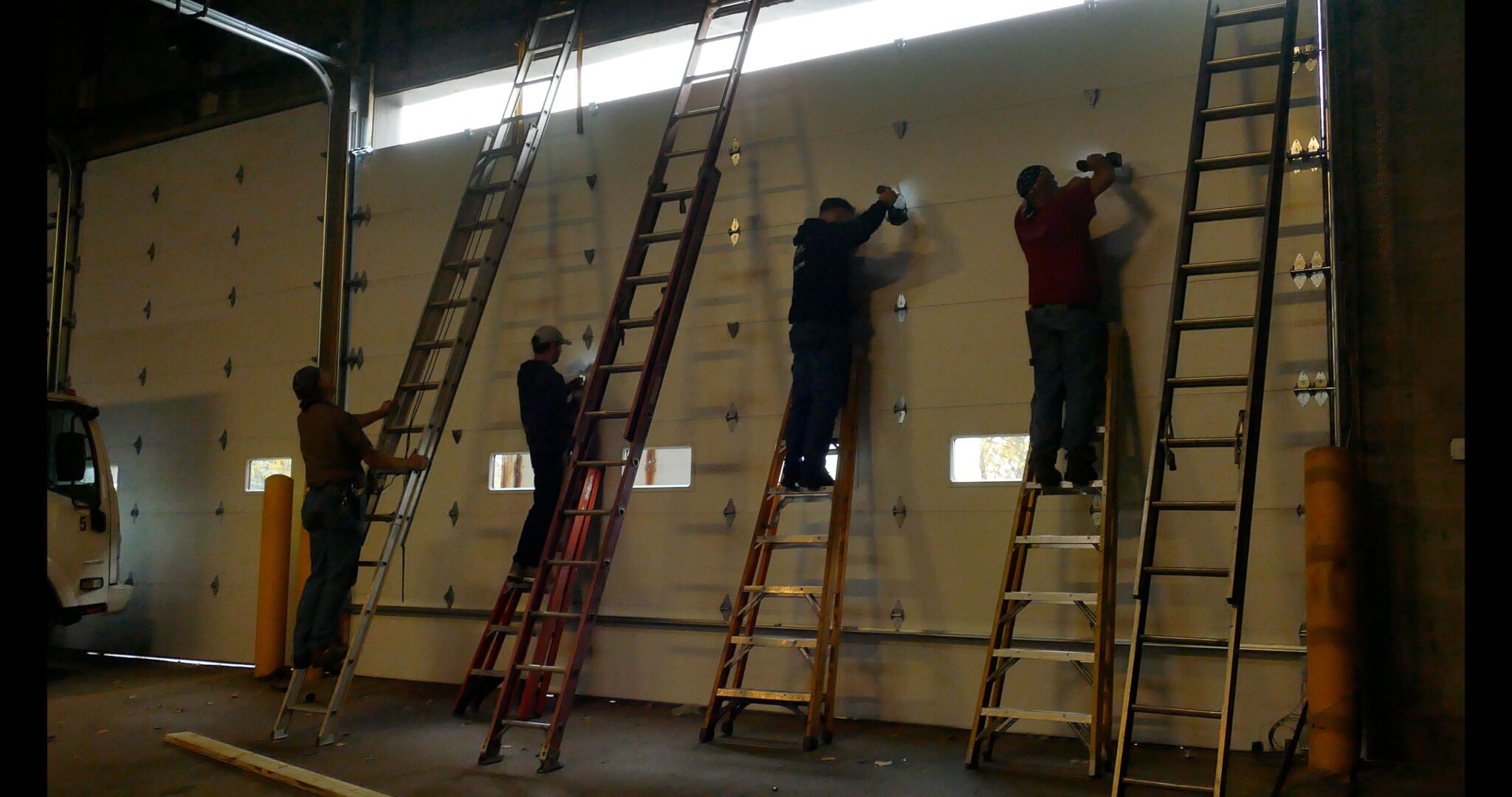
Five days. Eighteen Safe-Way Flush Panel doors. One crew. That was the assignment.
The project was a multi-unit residential complex where the original doors had reached end-of-life — panels rusted out at the bottom, springs at end-of-cycle, weatherseals destroyed. The owner wanted everything replaced at once for consistency, both visually and operationally. We staged the doors on-site and worked unit by unit — prepping the openings, hanging the new sections, tensioning fresh torsion springs, replacing all the rollers, tuning each opener.
The trick on a job like this isn’t the install — it’s the rhythm. If your crew can knock out three doors in a day, sustained, you finish on time. If you slip to two a day because of a track that needs reshimming or a header that needs scab framing, the whole schedule cascades. We finished on schedule. The owner sent us a Christmas card. Small things.
The Custom Pass-Door Commercial Build
This was the most interesting fabrication problem we tackled this year. A Chicago-area commercial client needed an 18-by-10 commercial garage door with an integrated pass door — a smaller, human-sized door built directly into the larger one — so workers could enter and exit without opening the main door for every trip. We worked with Amarr to spec a custom build. They produced the doors to our drawings, we handled the installation and fit-out.
Pass doors look simple in renderings. In practice, they require careful balance work because you’ve cut a hole in a structural panel — the spring system has to compensate for the asymmetric weight, and the hinges around the pass-door opening take more stress than standard hinges. We added reinforcement plates around the pass-door frame and upgraded the spring rating to match. The whole assembly has been running clean for ten months. No callbacks.
If you’re curious what the rest of our work looks like, the project archive lives at https://firstlinegarage.com/ — there’s a fair amount of before-and-after photography there that gives a better sense of finished work than any write-up can.
The Three-Door, Five-Hour Job
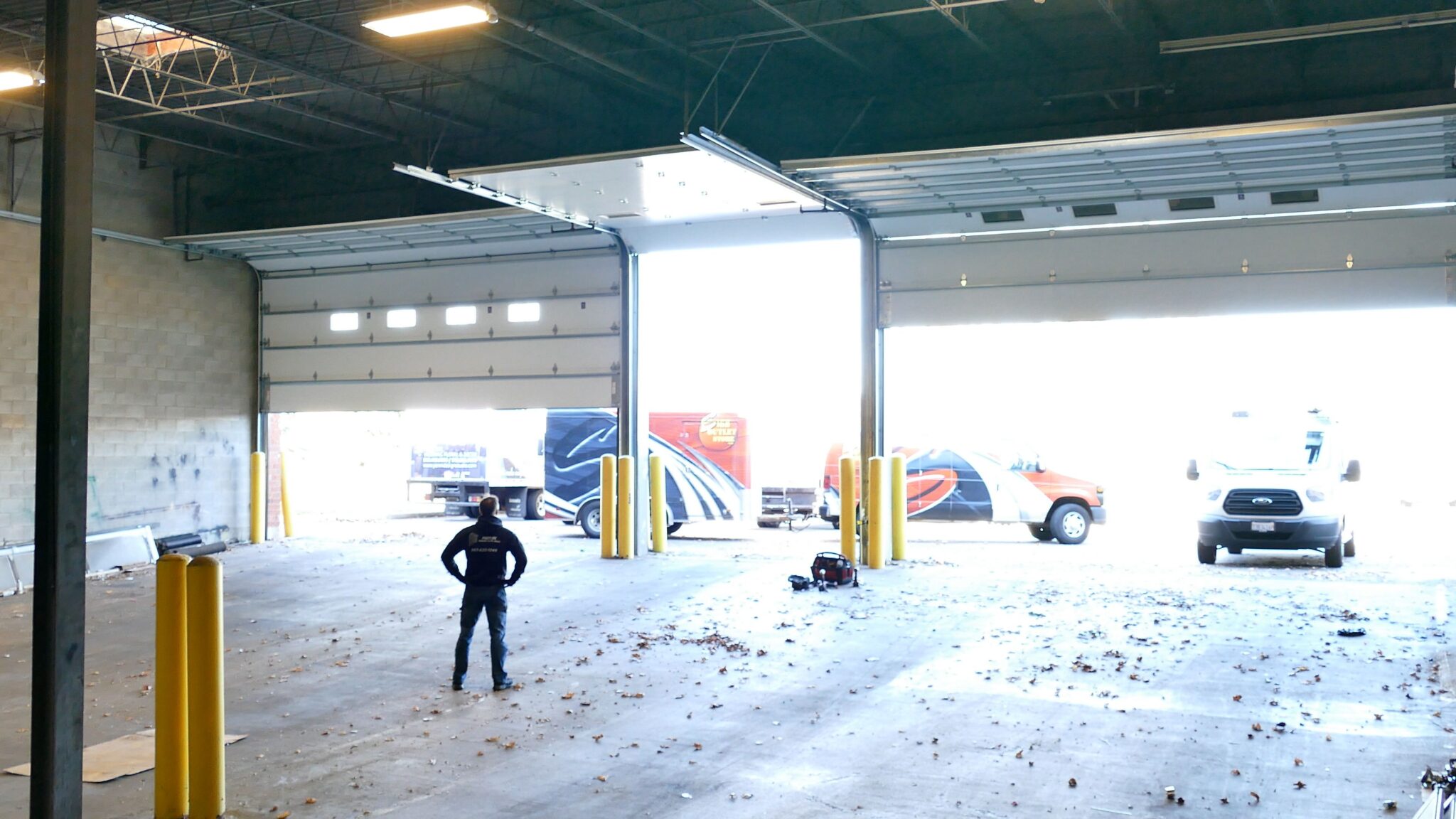
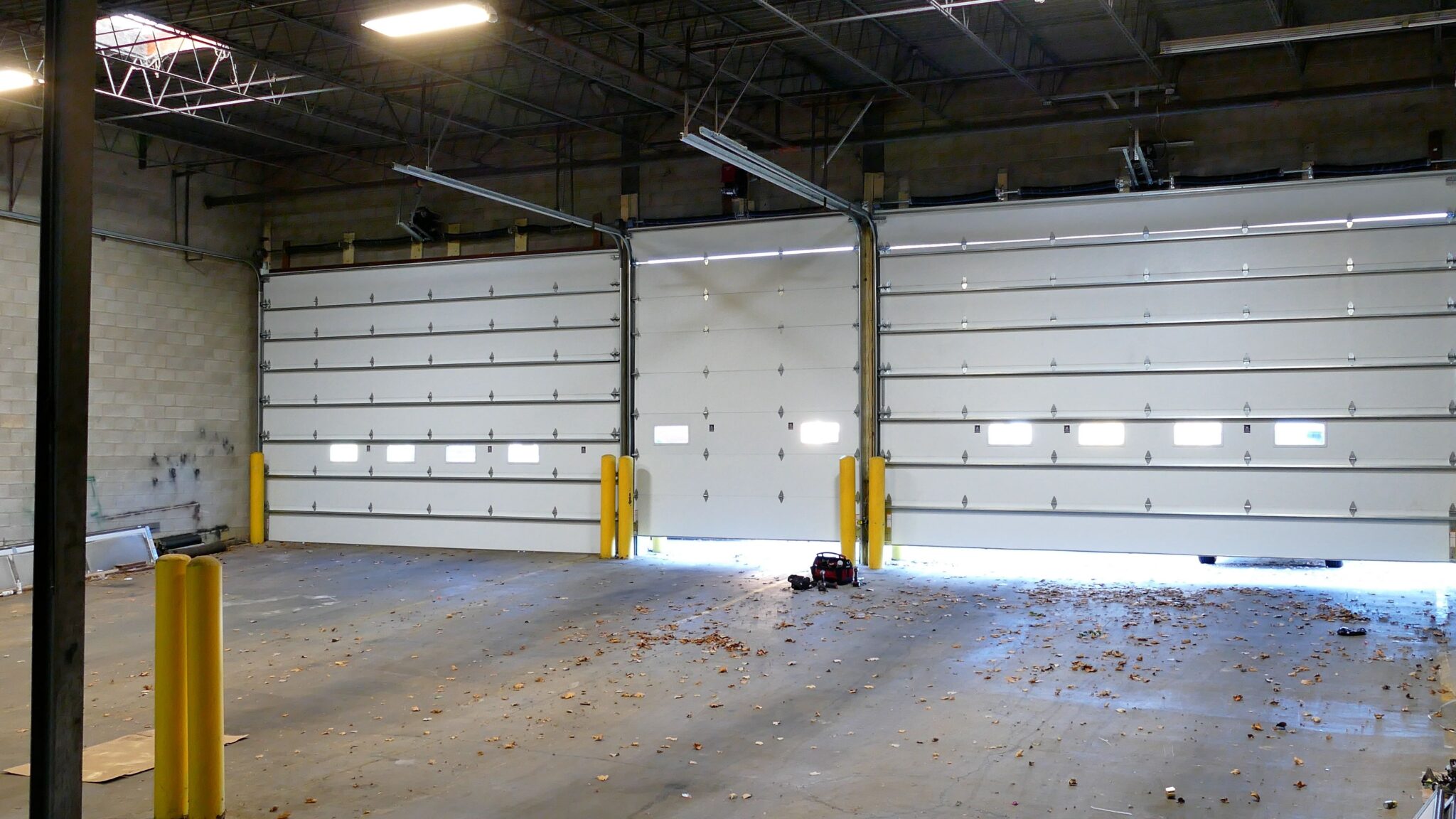
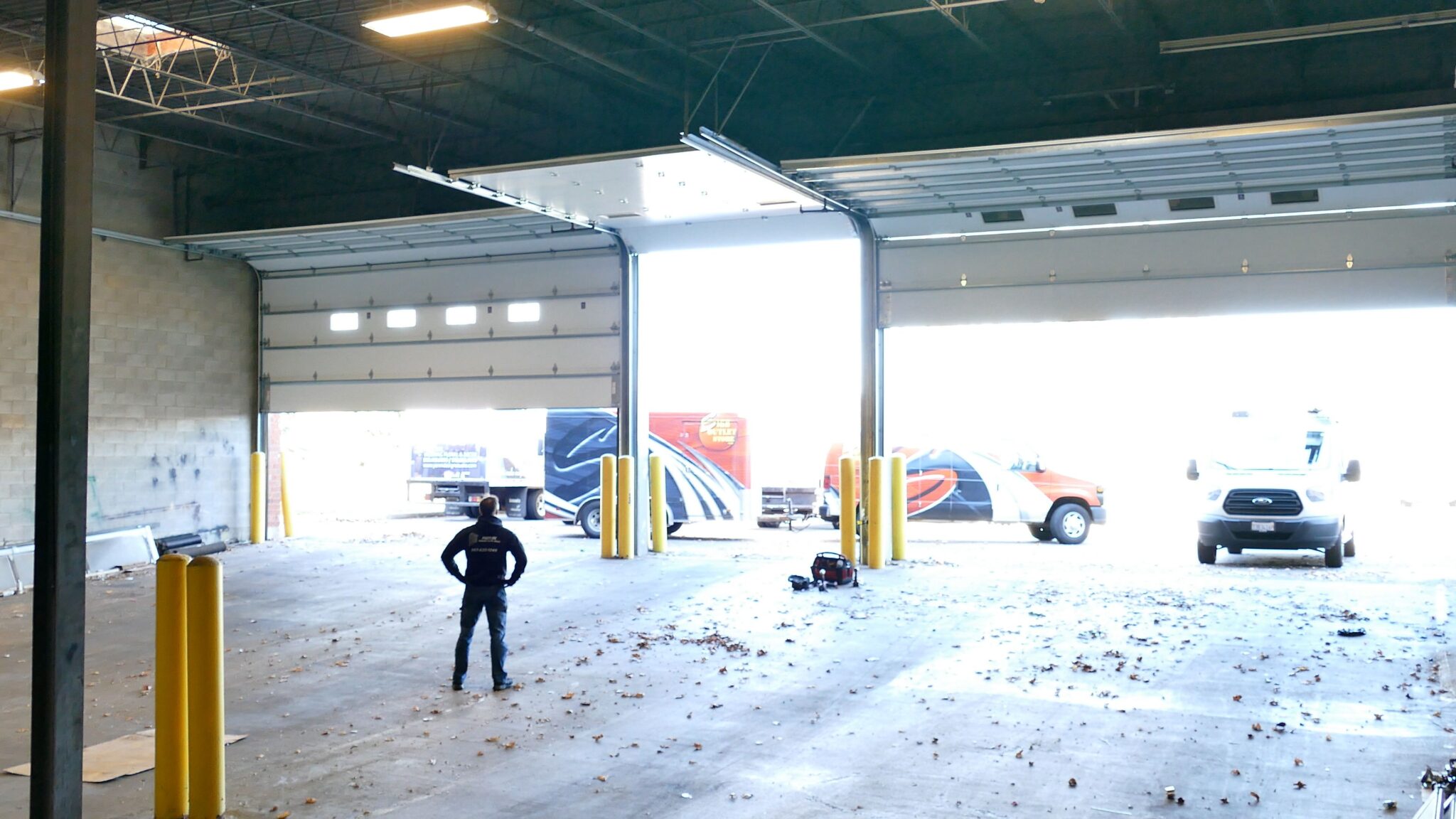
I’ll close with a small one. A property owner needed three identical garage doors — CHI Model 4283 panels, Chamberlain D2101 openers — installed in one visit. Old doors out, new doors in, openers programmed, sensors aligned, remotes paired, everything tested. We finished in five hours.
The reason I include it is because it represents what most of our days actually look like: in and out, problem solved, no drama. That’s the job a lot of Chicago homeowners want most — a clean, fast, single-visit replacement that doesn’t take a week of scheduling and three phone calls. It’s also the kind of job that sounds boring but is a real test of how well a crew works together. There’s no margin for the second tech to be slow on opener wiring when the first tech is already aligning the second door.
What All of This Adds Up To
I think about these projects together because they map out what a small Chicago garage door company actually has to be capable of, week to week. One day it’s a $4,000 wood-look door for a lakefront home. The next, it’s a custom pass-door commercial build. The day after, it’s three identical doors in five hours for a property owner who just wants the job done. Different doors, different openers, different problem to solve every time.
What I’ve come to believe is that the variety isn’t a side effect of doing this job — it’s the whole point. Any company that tries to specialize in just one slice of garage door work ends up turning down most of the calls that come in. We took the other approach. We built tools, kept the prices on the site, hired technicians who could handle a Canyon Ridge in the morning and a Metra rolling door in the afternoon, and tried to be the company a homeowner could call without having to figure out whether their problem was “the kind we handle.”
Fourteen years in, the part I still find satisfying is that none of these jobs felt routine while we were doing them. Every project has its own thing — a tight access window, a custom panel, a homeowner who wants something the last three companies wouldn’t quote. Figuring those things out, on the truck, with a small crew you trust, is most of why I’m still in this trade.