

There are many notable people among Chicago natives, including politicians, historians, lawyers, actors, singers and scientists. Constantine John Alexopoulos was one of the scientific geniuses. He made a significant breakthrough in the field of research and innovation. With his dedication to scientific research and his enthusiasm for unraveling the secrets of nature, Alexopoulos became a leading figure in the field of mycology in Chicago. His pioneering contributions to the area and tireless efforts earned him recognition and respect from both colleagues and residents of the city. Find out more at chicagoname.
The life path of Alexopoulos
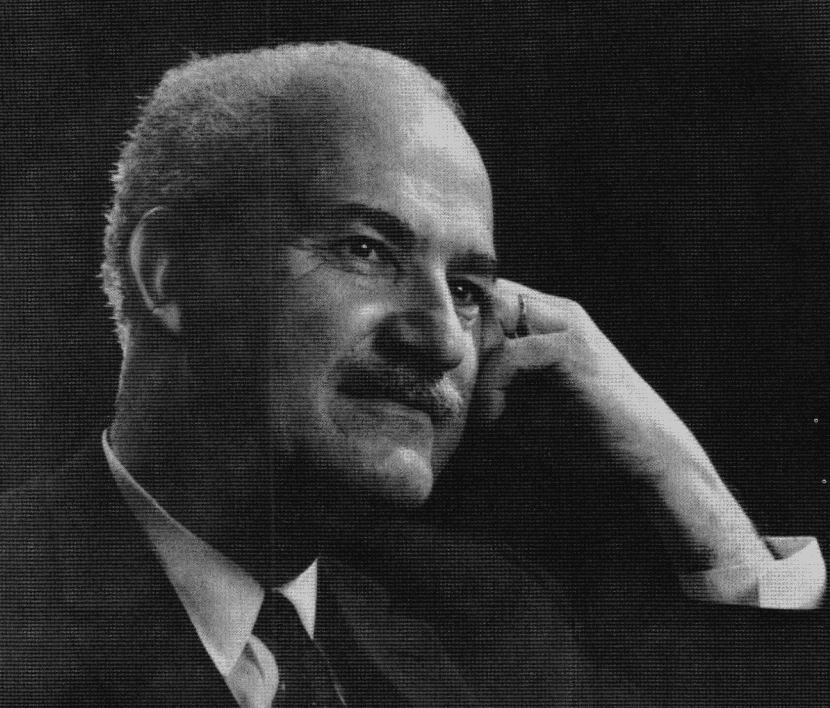
The future scientist was born in Chicago in 1905. From a young age, Constantine John Alexopoulos developed a keen interest in science. His parents were the ones who constantly encouraged him to explore the natural world. In particular, he showed a strong interest in learning about different plants. Even as a young man, Alexopoulos demonstrated exceptional abilities in the field of botany and a strong desire to learn more. All of this encouraged him to get a higher education. As a result of his passion, Alexopoulos decided on a career that had a close connection with botany. In particular, after graduating from high school, he studied horticulture at the University of Illinois.
While at university, he conducted an extensive research in the field of biology. Under the guidance of renowned professors, Alexopoulos refined his scientific abilities and gained a thorough comprehension of the subject. It was then that he developed a strong interest in mushrooms. From that moment, his life became inextricably intertwined with mycology. His entire professional career was devoted to the study of fungi. So, in 1928, he obtained a master’s degree for his research on “the cytology of microsporogenesis of raspberry hybrids,” and in 1932, he received a doctorate for his research called “Pycnidial Fungi from Vitis.”
Groundbreaking research and contributions to mycology
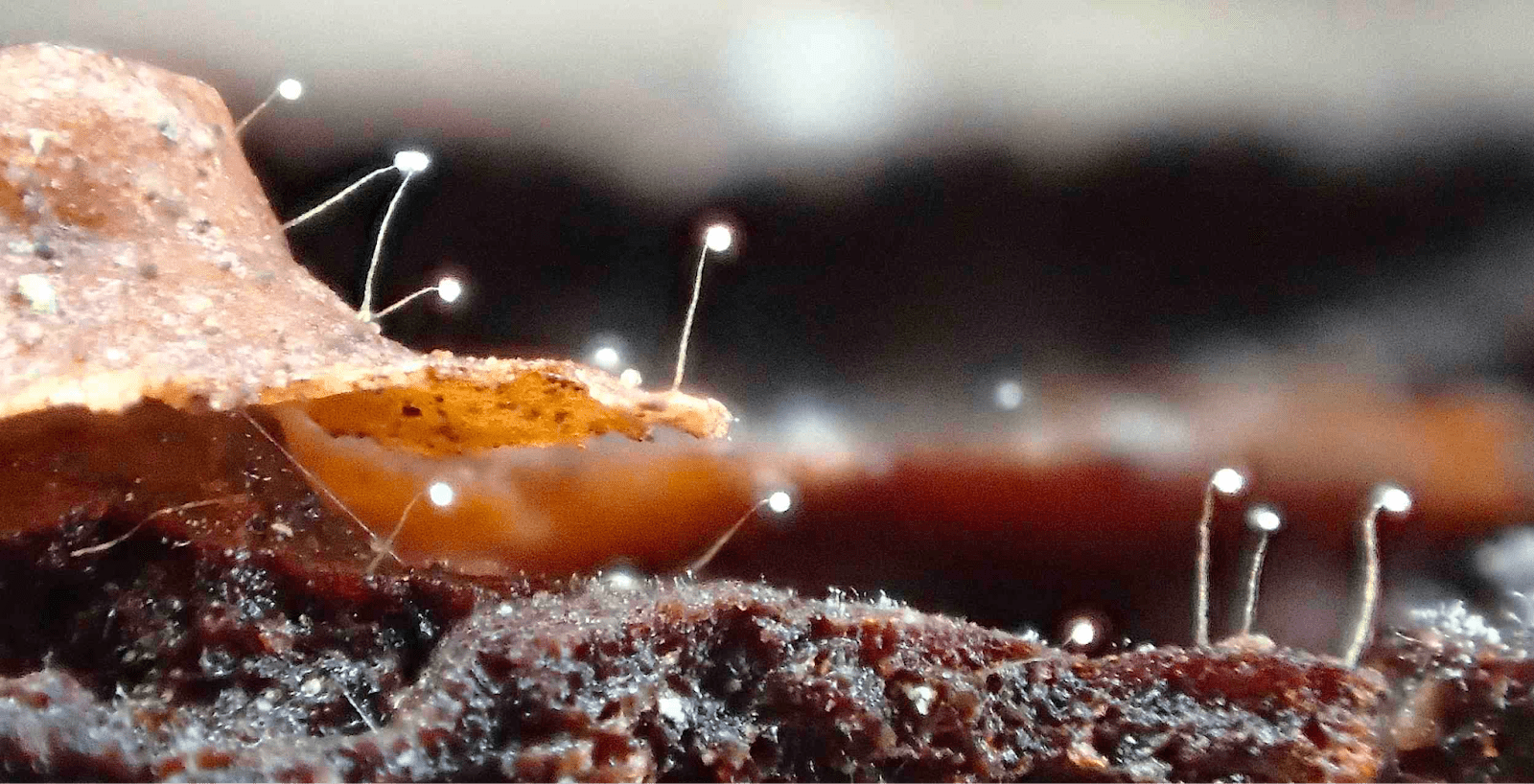
The mycological research conducted by Constantine John Alexopoulos was nothing short of groundbreaking. His unwavering pursuit of scientific research and careful attention to detail have resulted in invaluable discoveries in the mushroom world. One of his most notable contributions was in the field of fungal taxonomy, as he worked on identifying and classifying previously unknown species. Through comprehensive fieldwork, lab examinations and cooperation with fellow mycologists, Alexopoulos added numerous novel species to the fungi inventory, thereby expanding the knowledge of Chicagoans and the global community regarding their remarkable diversity.
Specifically, he named and identified several mushroom species:
- Echinostelium elachiston
- Echinostelium cribrarioides
- Physarella oblonga f. alba
- Acrasiogymnomycotina
- others.
During his entire life, Alexopoulos published more than 80 scientific papers, the majority of which were devoted to the study of Myxomycetes. In addition to fundamental research in mycology, Alexopoulos made significant contributions to the field of fungal DNA. His studies in this field were particularly significant, as he was among the first to compare the proportions of guanine and cytosine in fungal DNA for taxonomic purposes.
Furthermore, Alexopoulos’ research also includes the study of fungi ecology and symbiosis. His research on mycorrhizal associations – relationships between fungi and plant roots that are mutually beneficial – has provided insight into the intricate web of linkages that sustains ecosystems. Thanks to his research into the mechanics underlying these symbiotic connections, people in Chicago and all across the world now have a deeper knowledge of the crucial role fungi play in the nitrogen cycle and ecological stability.
The contribution of Constantine John Alexopoulos to mycology has been well acknowledged. His work has been published in prominent American scientific journals.
In addition to his scientific work, Alexopoulos worked to increase public awareness of the importance of mushrooms. He actively participated in outreach programs, public lectures and educational efforts aiming at bridging the gap between scientific knowledge and the general public. Through his efforts, he awoke in Chicagoans a sense of surprise and admiration for his research and discovery in the fascinating world of mushrooms.
In the twenty-first century, Constantine John Alexopoulos is still very respected. He made a huge contribution to the study and discovery of novel fungus species. His accomplishments in the field of mycology earned him numerous awards, including:
- the Fulbright Research Fellow Award by the University of Athens in 1954
- Distinguished Mycologist Award in 1981
- W.H. Weston Award for Teaching Excellence in Mycology by the Mycological Society of America in 1983
- many others.
Alexopoulos was a true pioneer in the field of mycology, revealing the hidden treasures of the kingdom of fungi to the people of Chicago and around the world.