

Chicago, located in the heart of the United States, has a rich history in different industries, including hydroelectricity. Although there are no large natural water sources in Chicago suitable for large-scale hydroelectric plants, the city’s hydroenergy history is closely tied to the Chicago River and its connection to the Great Lakes. We are talking about the construction of the Lockport Powerhouse. Read more at chicagoname.
The emergence of hydropower in Chicago
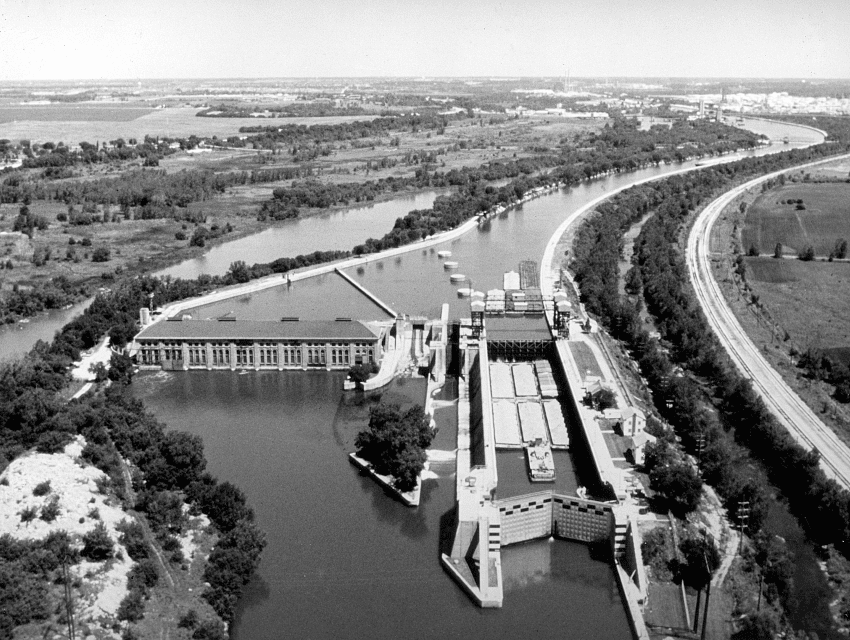
At the end of the 19th and early 20th centuries, the Chicago River played a vital role in the city’s industrial growth and transportation sector. The river was initially used for shipping and trade but soon became heavily polluted by industrial waste and sewage. There were attempts to purify the river and make it more usable. Water power became a crucial component of the revitalization process.
One of the significant hydroelectric projects on the Chicago River was the creation of a power plant and dam in Lockport in 1907. The dam, situated in Lockport, a southwest suburb of Chicago, was built to regulate the river’s water flow and provide the region, including the city of Chicago, with hydroelectric power. The power plant, equipped with turbines and generators, produced electricity with the help of water.
The importance of the Lockport Powerhouse for Chicago
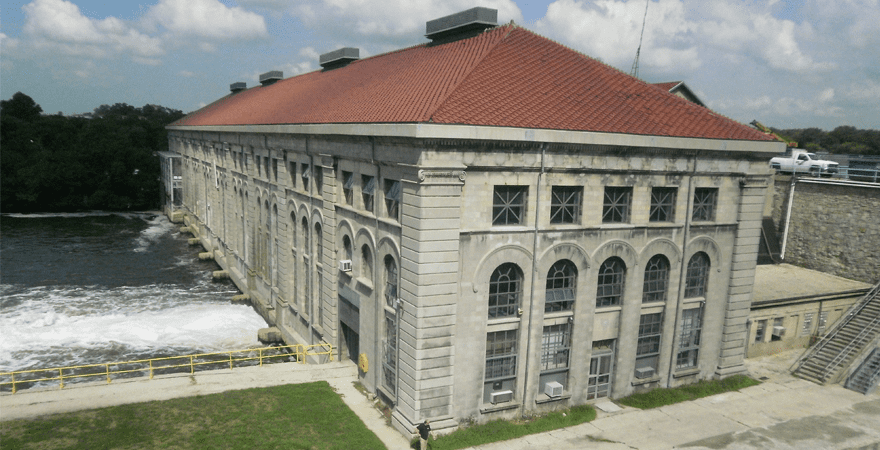
The Lockport Powerhouse and dam were part of a bigger Illinois Waterway project aimed at improving navigation and water supply of the Chicago River and connecting it to the Mississippi River System. The hydroenergy produced at the Lockport facility not only provided electricity to nearby settlements. It also helped operate locks and waterworks along the Illinois Waterway.
In the 20th century, Chicago was a city with a thriving economy. Thus, its various industries, businesses and millions of residents required a significant amount of electric power. The Lockport Powerhouse played a crucial role in meeting this demand, generating a substantial portion of the city’s electricity. Owing to the stable and reliable power supply, Chicago would definitely become a center of commerce, innovation and culture.
In addition, at a time when the global community was focused on sustainable growth and combating climate change, the Powerhouse was of particular importance to Chicago. Harnessing the powerful force of water, it provided the city with a clean and renewable source of energy. Therefore, the city’s dependence on exhaustible energy sources in the 20th century was greatly reduced, leading to a more green-conscious future.
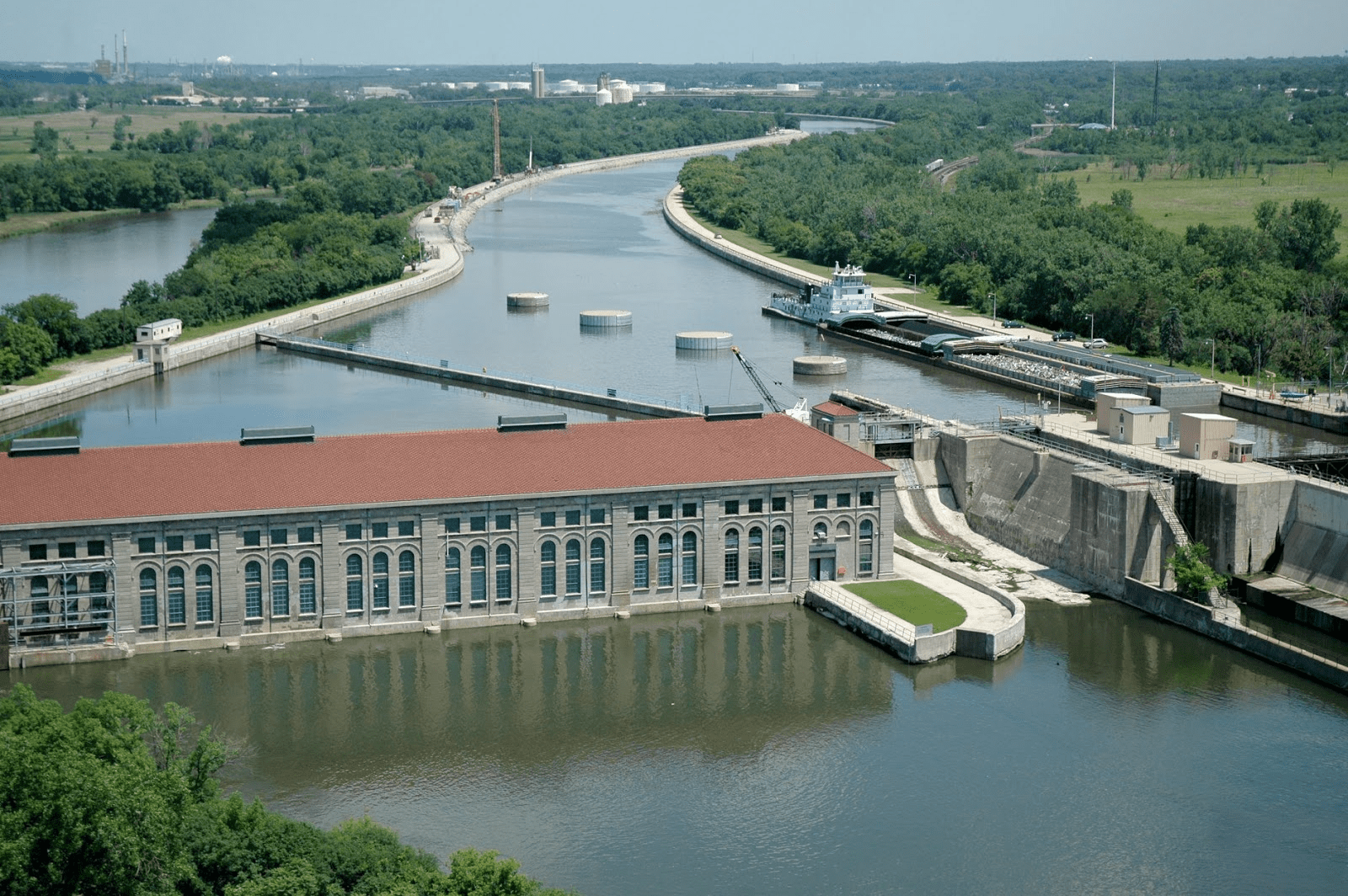
Over the years, the technology advancements and the availability of alternative energy options such as coal and natural gas have led to a decrease in the dependence on hydroelectric power in the Chicago region. Today, water-power plants on the Chicago River and its confluents mostly serve as auxiliary power sources, complementing the region’s overall electricity needs. In the 21st century, the lock, situated next to the dam and power station, is primarily utilized for barge traffic.
Even though hydropower is less important in the city now, the historical significance of the Lockport Powerhouse remains a testament to Chicago’s industrial and engineering achievements in the 20th century. This project was essential in the development and revitalization of the Chicago River, as well as in the growth of the region’s energy infrastructure.
Built at the beginning of the 20th century, the Lockport Powerhouse is more than just a structure, but is the lifeblood of Chicago’s hydroelectricity. Its role in producing clean and renewable energy was crucial for the growth and development of the city as well as for environmental protection.