

The Jardine Water Purification Plant is considered one of the biggest worldwide. It is placed on the shore of Lake Michigan near the Navy Pier. The station supplies almost 1 billion gallons of water annually, writes chicagoname.com.
Water cribs: the beginning of the story
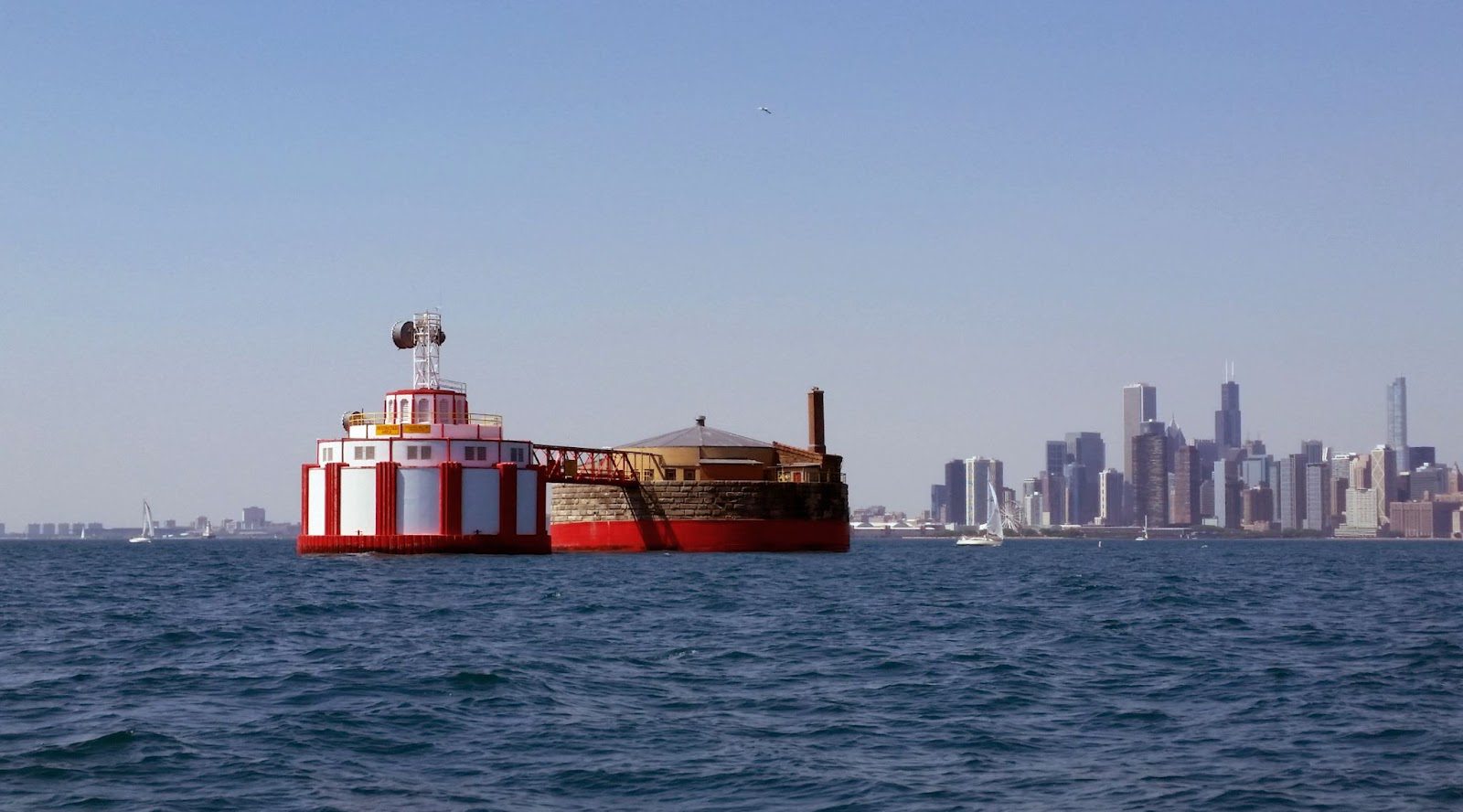
The story started during the Civil War (1864). The population of the city began to increase rapidly by its end. The water in the local rivers and lakes was badly polluted with chemicals and rotting animal carcasses from cattle ranches, which led to epidemics of cholera, typhoid and dysentery.
The authorities were concerned about the situation and turned to Chicago engineer Ellis Chesbrough. He made a plan to build a structure called water cribs. Its main purpose was to deliver clean water to the city through a pipeline.
Thus, the building began. One crew worked onshore and dug 200 feet below the lake bed, while another one was building a water intake grate two miles from Michigan. All work was done manually with picks and shovels. In 1867, the building was finished and the opening ceremony of the plant took place. Thousands of gallons of purified water flowed into the new 154-foot tower and pump station on Michigan Avenue.
After the Great Fire of 1871, the authorities decided to build more water cribs to distribute water supplies for fire protection. In total, 10 of them were built near the shores of the city.
It is worth noting that the modern city uses two water cribs, which pump water to the South Water Purification Plant and Jardine Water Purification Plant.
The purification technique
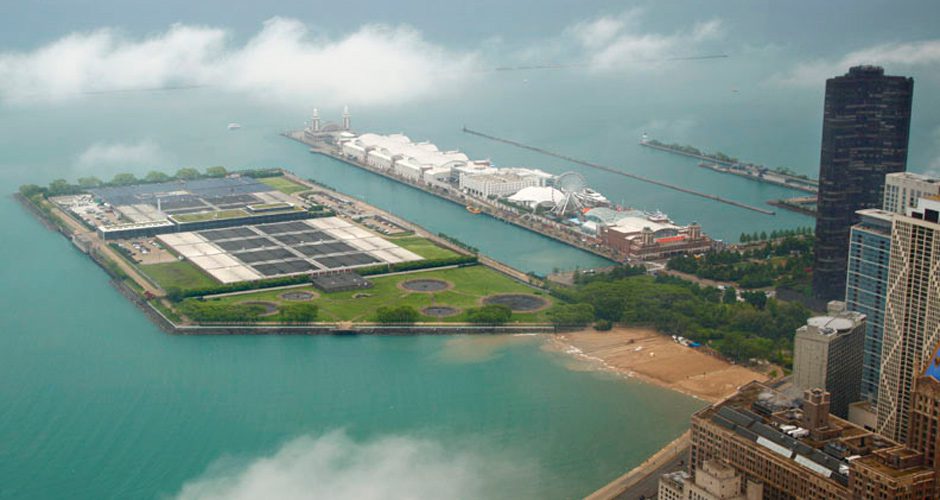
This plant was developed in the early 1960s and launched in 1968. The process starts 2.5 miles offshore at so-called water cribs. Each of them takes water from a depth of 20 feet to pipes cut out of the rock. Once it reaches the equipment, big particles are filtered by a rotating faucet. Then, the liquid is taken up to a height of 25 feet, where the gravity cleaning begins.
The purification starts with chlorine that kills harmful microbes. The activated carbon removes smells and tastes. Fluoride is added to it at the next stage. Later, aluminum sulfate is put to make the smallest solids stick to each other.
Big paddles help mix alum and water. Polyphosphate is also added at the end. It coats the pipes from the inside. Due to this, lead from plumbing fixtures does not enter the system. Then, the liquid is moved into special tanks, where the flakes sink. This stage removes about 90% of solids.
Then, the movement through gravel and sand into large tanks takes place. The whole process takes 8 hours. At last, the liquid is pumped through a 4,000-mile pipeline under the lake.
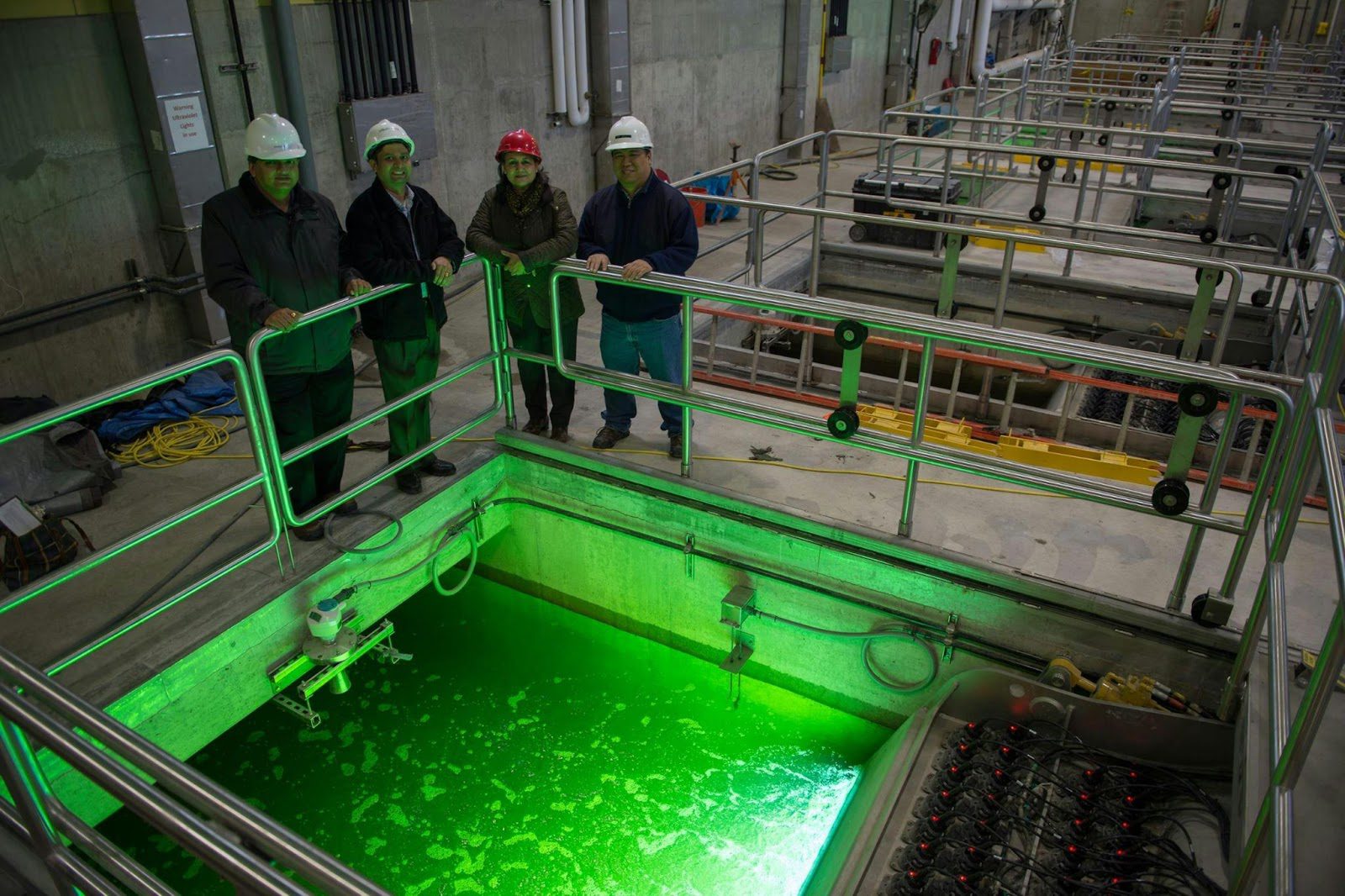
The plant adheres to strict quality control methods, so the purified water meets all requirements. The station is constantly monitored and samples are taken at each stage of treatment. The tests determine the presence of microbes, pesticides and heavy metals. Thus, the plant keeps Chicagoans safe.
