

Park · Chicago · ⭐ 9.5/10 · 3899 reviews · updated: 2026-08-04 16:02:06
Address: 1400 N Humboldt Dr, Chicago, IL 60622, United States
Humboldt Park — lagoons, an inland beach and the Boricua heart of the West Side
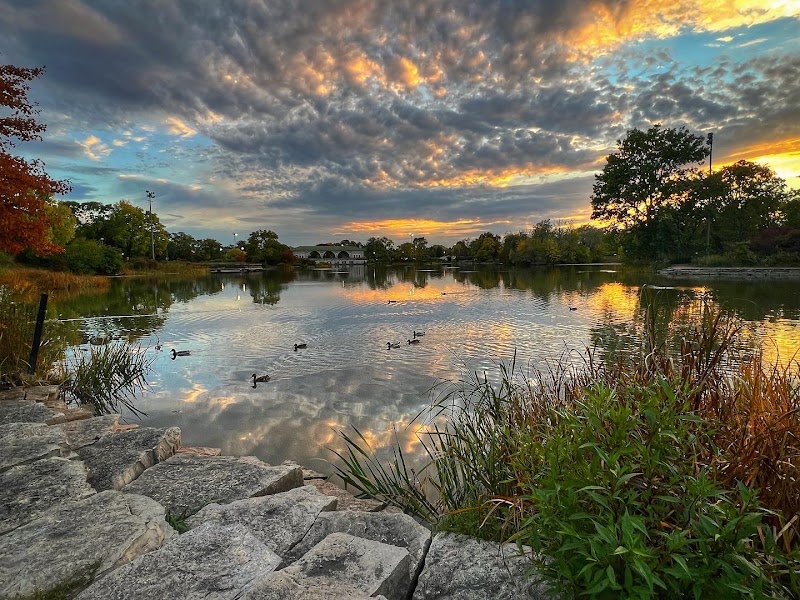
Two lagoons joined by a hand-built “prairie river”, a beach with real sand and no lake in sight, a Prairie School boathouse under a long low roof, and a formal garden guarded by bronze bison left over from the 1893 World’s Fair. Close to two hundred acres of nineteenth-century landscape design that has been, since the 1950s, the anchor of Chicago’s oldest Puerto Rican community.
Highlights
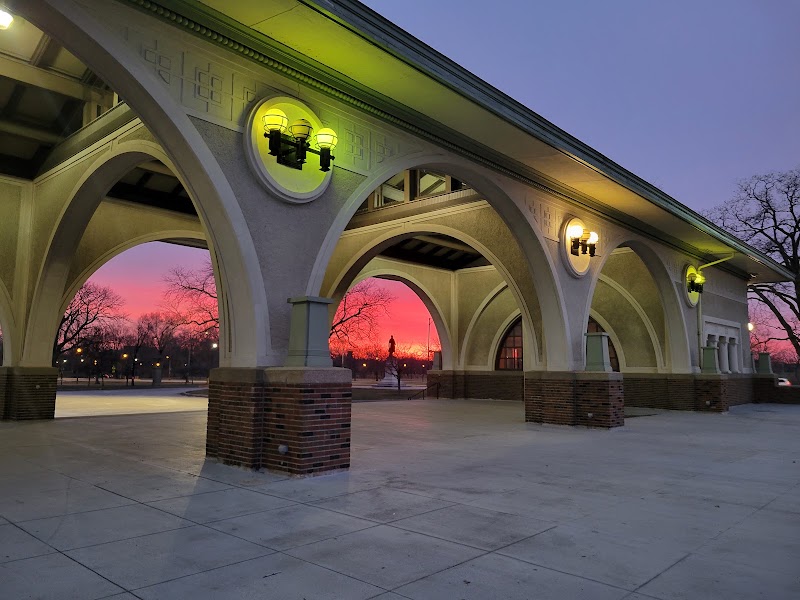
- Boathouse Pavilion (1907) — Schmidt, Garden & Martin’s three-arched Prairie School building, ornamented in circles and squares, made a Chicago Landmark on November 13, 1996.
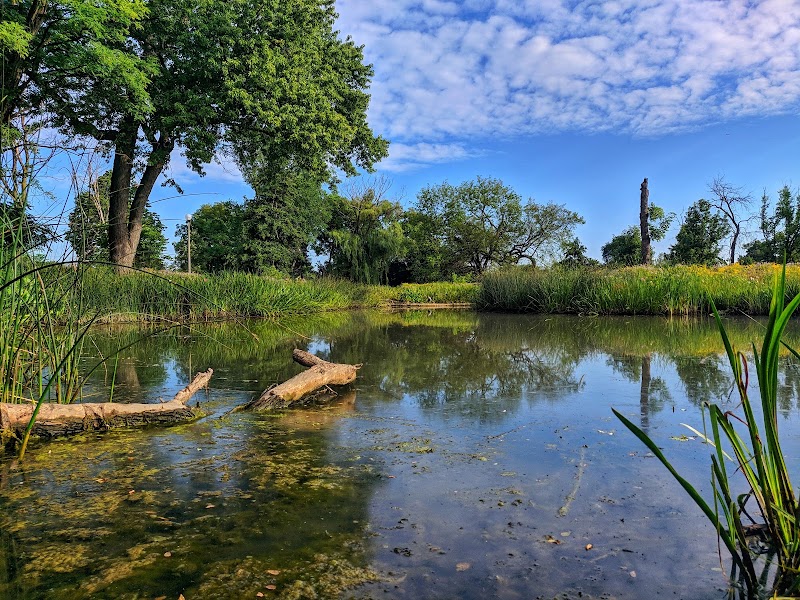
- Jensen’s prairie river — Jens Jensen linked Jenney’s twin lagoons with a naturalistic waterway of rocky brooks, stone bridges and fishing overlooks.
- Humboldt Beach — Chicago’s only inland beach: sand and swimming behind the fieldhouse, nowhere near the lakefront.
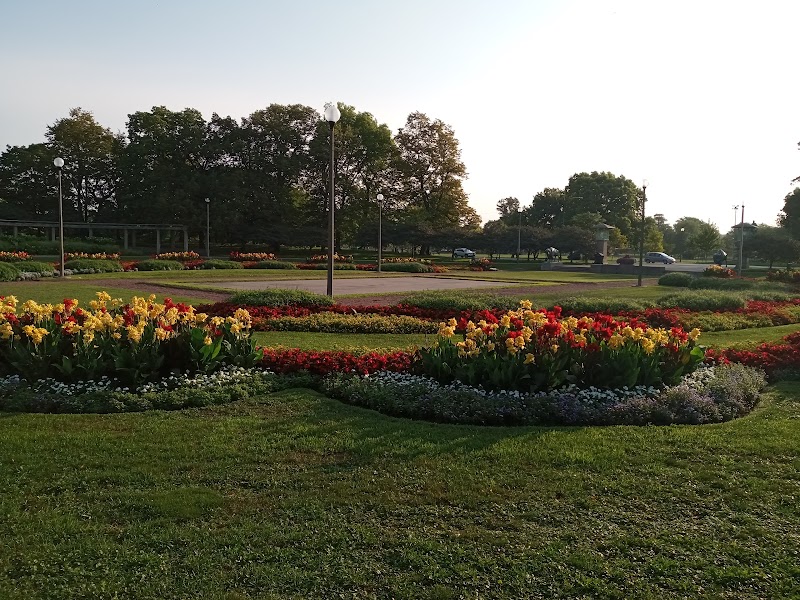
- Formal Garden — Jensen’s circular rose garden, replanted in 2018 to a scheme by plantsman Piet Oudolf with Hitchcock Design Group.
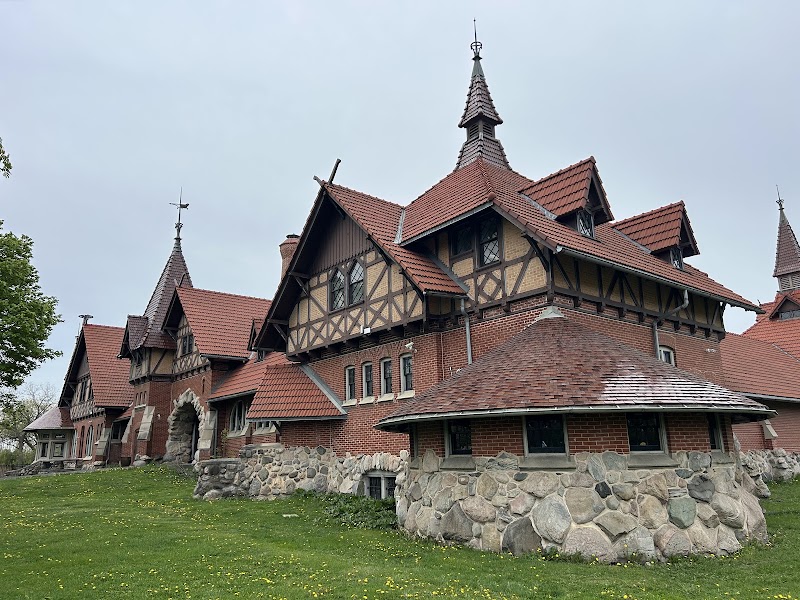
- Stable and Receptory (1895–96) — Frommann & Jebsen’s half-timbered German country house in red pressed brick, now the National Museum of Puerto Rican Arts & Culture.
- Fieldhouse (1928) — Michaelsen & Rognstad’s U-shaped hall with turrets at both ends, holding two gymnasiums, a fitness center and a boxing gym.
What you’ll find
The park is large enough to hold a beach, a boxing gym and a rose garden without any of them crowding the others, and its monuments read as a record of successive immigrant Chicagos.
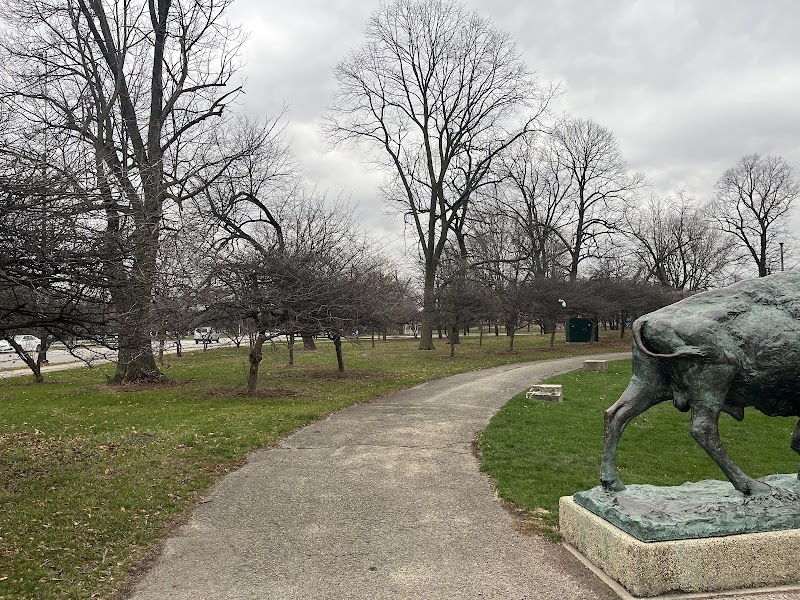
- Bronze bison by Edward Kemeys, shown at the 1893 World’s Columbian Exposition and standing in the garden since 1915.
- A ten-foot statue of Alexander von Humboldt by Felix Görling, with monuments to Leif Erikson and Fritz Reuter nearby.
- Little Cubs Field, a scaled replica ballpark, alongside baseball diamonds and an artificial-turf soccer pitch.
- An outdoor pool, a spray pool and a water playground, all separate from the beach.
- Community gardens, perennial beds and natural areas threaded with walking paths.
- Lagoons open to fishing, and a boathouse restored in the mid-2000s for park programs and events.
Things to do — and who it’s for
- Swimmers — the inland beach is lifeguarded in season and is the only one of its kind in the city.
- Architecture walkers — two separately designated Chicago Landmarks and a Jazz Age fieldhouse inside one park.
- Families — beach, spray pool, water playground, Little Cubs Field and several rebuilt playgrounds.
- Culture seekers — the museum’s galleries, mosaic courtyard, classrooms and performance space fill the old stables.
- Anglers and walkers — the lagoon and prairie river circuit feels rural in the middle of the West Side.
- Festival-goers — the Puerto Rican Festival, a Latin jazz festival, Shakespeare in the Park and outdoor movie nights all run here.
Getting there & practical
Humboldt Park lies on the West Side, in the neighborhood that takes its name from it. No ‘L’ station stands at the park’s edge: the Blue Line’s California and Western stops on the O’Hare branch are the nearest, each a walk or a short bus ride away, and several bus routes come closer than that. Entry to the park, the beach, the lagoons and the gardens is free. The National Museum of Puerto Rican Arts & Culture in the old stables charges its own admission, and fieldhouse programs are registered and paid separately. The grounds open at six in the morning and close at eleven at night. The beach is a summer operation with posted lifeguard hours, and the museum keeps shorter days than the park. Two hours covers the lagoons, the Formal Garden and the boathouse; add an hour for the museum.
When to visit
Summer is loudest and best: the beach open, the lagoons full of anglers, festival stages up, and June’s Puerto Rican celebrations turning the park and the corridor beside it into one long street party. Autumn suits the prairie river, when the oaks turn and Jensen’s planting scheme finally becomes legible. Winter is stark and photogenic — the boathouse arches against snow are the classic shot — while the fieldhouse gyms and the boxing program carry the season indoors. Spring brings the perennial beds and the rebuilt Formal Garden into their first flush, and is usually the quietest good weather of the year.
Good to know
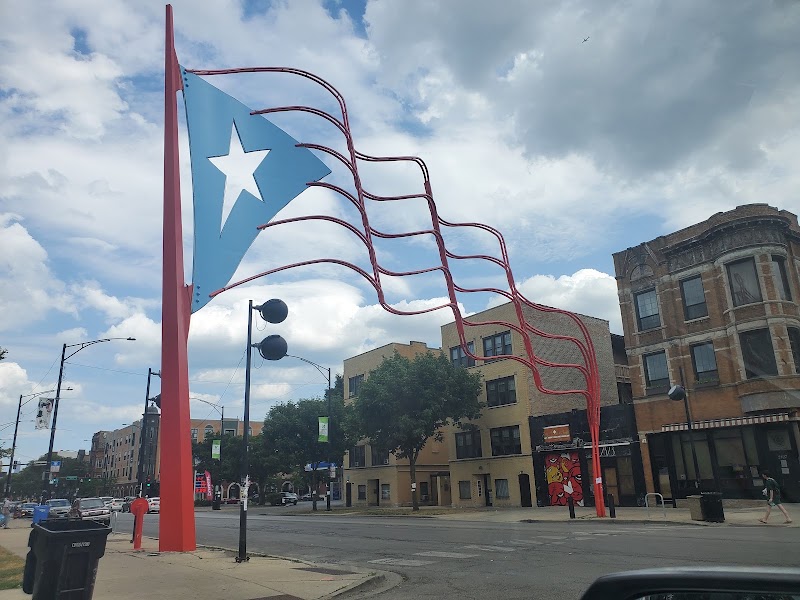
The West Park Commission was created in 1869, and this ground was named for Alexander von Humboldt (1769–1859), the Prussian naturalist, partly to court the support of Chicago’s large German population. William Le Baron Jenney — later the engineer behind the steel-frame skyscraper — laid the park out from 1871, turning flat prairie into a pleasure ground of carriage drives, horse trails and two lagoons; it opened in 1877. Frommann & Jebsen’s stable and receptory went up in 1895–96, sixteen horses stabled behind a visitor hall and the superintendent’s office. Jens Jensen, working here from about 1905 to 1920, reshaped the park into the Prairie style: he joined the lagoons with his prairie river, planted native aquatics and a rose garden, designed the lanterns and urns, and brought in Schmidt, Garden & Martin for the 1907 boathouse. Michaelsen & Rognstad’s fieldhouse followed in 1928. Puerto Rican families began arriving in the early 1950s and made this the oldest Puerto Rican community in Chicago; the commercial corridor beside the park, long known as Paseo Boricua, was designated Puerto Rico Town in 2021 and is the only official Puerto Rican cultural district in the United States. The park joined the National Register of Historic Places in 1992, the boathouse was landmarked in 1996 and the stables in 2008. The Institute of Puerto Rican Arts & Culture, founded in 2000, restored the stables and opened its museum there in 2009.
Visitor tips
- The park runs to nearly two hundred acres — pick the lagoon circuit or the beach-and-gardens side rather than trying to walk the whole thing.
- Check the museum’s opening days before you set out; it keeps far shorter hours than the park itself.
- Come in early June for the Puerto Rican festivities, or mid-week in July if you want the inland beach without the crowd.
Questions & answers
Is there really a beach here? Yes. Humboldt Beach, behind the fieldhouse, is Chicago’s only inland beach — man-made, lifeguarded in season, and nowhere near the lake.
Is the park free? Yes. Grounds, beach, lagoons and gardens cost nothing. The National Museum of Puerto Rican Arts & Culture charges its own admission, as do registered fieldhouse programs.
Why is the boathouse famous? It is one of the purest Prairie School park buildings in Chicago: three great arches under a low sweeping roof, ornamented in circles and squares, built in 1907 by Schmidt, Garden & Martin and landmarked in 1996.
Who designed the landscape? William Le Baron Jenney laid it out from 1871; Jens Jensen remade much of it in the early twentieth century, adding the prairie river and the rose garden that survives as the Formal Garden.
What is the connection to Puerto Rico? The surrounding neighborhood has been the center of Chicago’s Puerto Rican life since the 1950s. The park hosts the community’s major festivals, and the museum in the old stables is the only one of its kind in the continental United States.
Can you fish in the lagoons? Yes. The lagoons and the waterway connecting them are fishing spots, using the overlooks and bridges Jensen designed into the plan.
Photos
Show 1 more photos
Visitor reviews
Reviews last updated: 2026-08-04 16:02:06
Data is refreshed monthly. Sources: chicagoname.com and editorial picks based on reviews.
This is a great green space that includes walking paths, butterfly gardens, baseball diamonds, a beach, picnic areas and a playground.
It's a beautiful park that's wonderful to explore. At some points you can see part o…
A place to relax, To gather your thoughts
This was a really nice park, and the natural areas are great for birdwatching. The area between the boathouse and the field house is probably one of the most beautiful walking areas in Chicago. The only thing I didn't li…
Nice park, a playground, even a little island with spots for fishermen.. But we never did find a RESTROOM!