

Park · Chicago · ⭐ 9.3/10 · 7641 reviews · updated: 2026-08-04 16:02:05
Address: 6401 S Stony Island Ave, Chicago, IL 60637, United States
Jackson Park — where the White City stood
More than 550 acres of lagoons, meadows, beaches, harbors and old fair grounds spread along the South Side lakefront, in a landscape that has been rebuilt twice over. Frederick Law Olmsted and Calvert Vaux drew the first plan in 1871, for what was then a sandy, marshy, wind-scoured lake edge that nobody wanted. Two decades later the same Olmsted returned to reshape it into the grounds of the 1893 World’s Columbian Exposition — the White City, the most consequential world’s fair the United States ever held. The plaster palaces burned and vanished within two years, but the bones remained: a Japanese garden on an island, a gilded statue, one surviving classical palace, and a chain of lagoons that still governs how the park is walked today.
Highlights
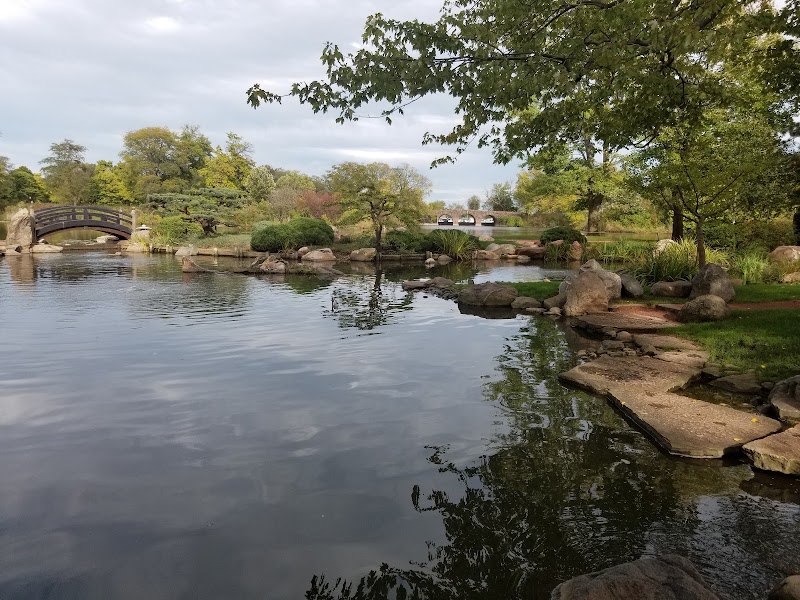
- The Garden of the Phoenix — the Japanese garden on Wooded Island, descended directly from the 1893 Ho-o-den pavilion, with a moon bridge, stone lanterns, a waterfall and, since 2016, Yoko Ono’s steel lotus sculpture Sky Landing.
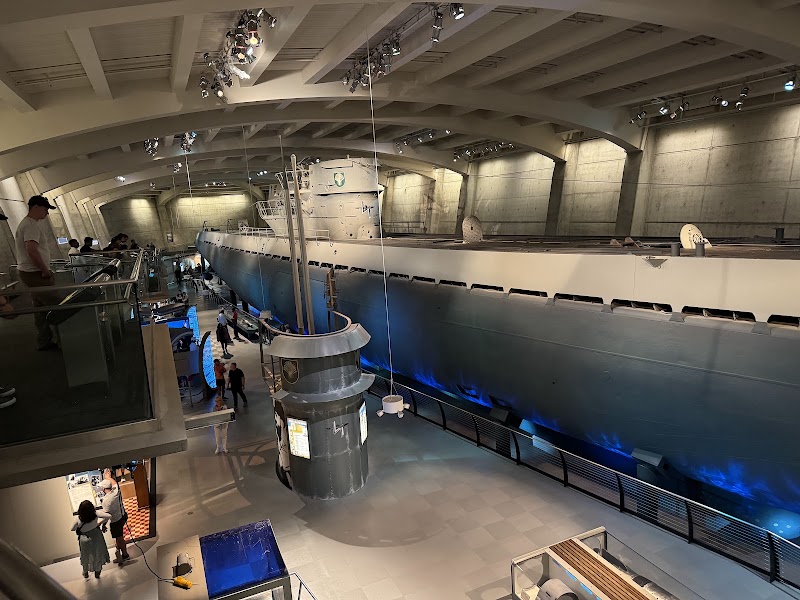
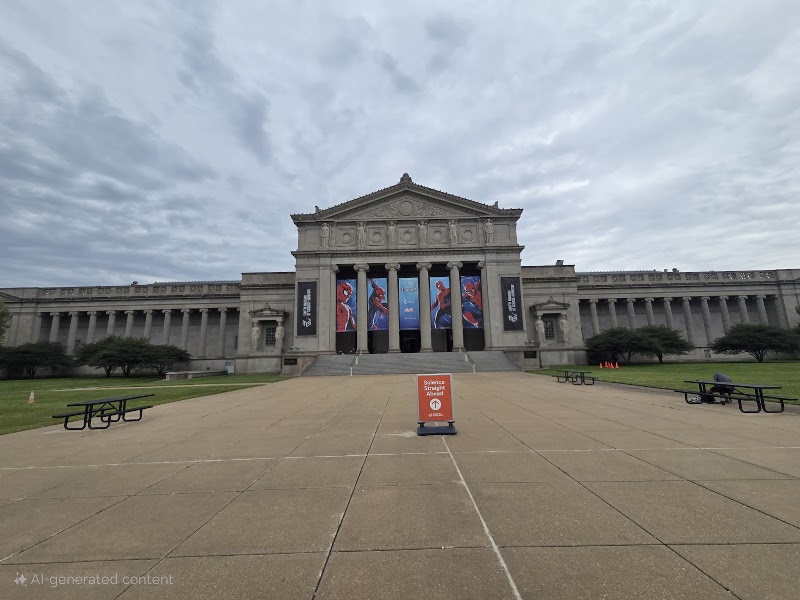
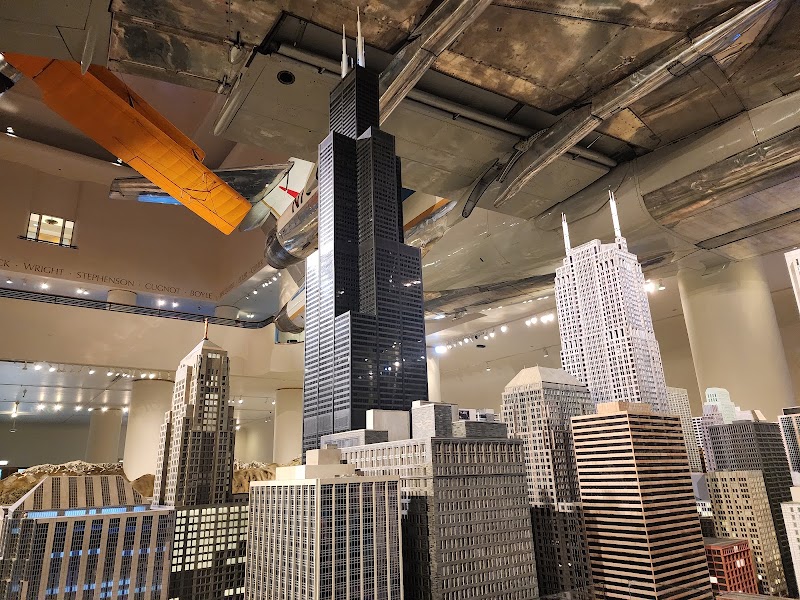
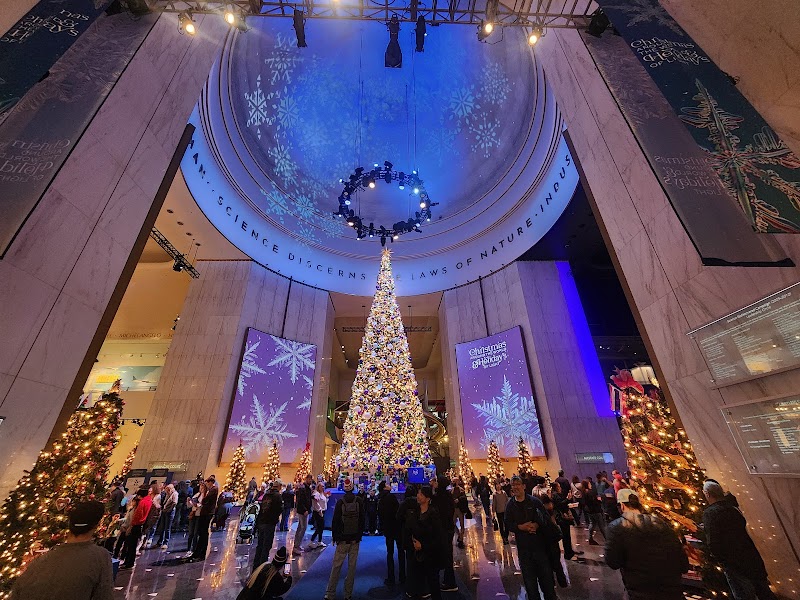
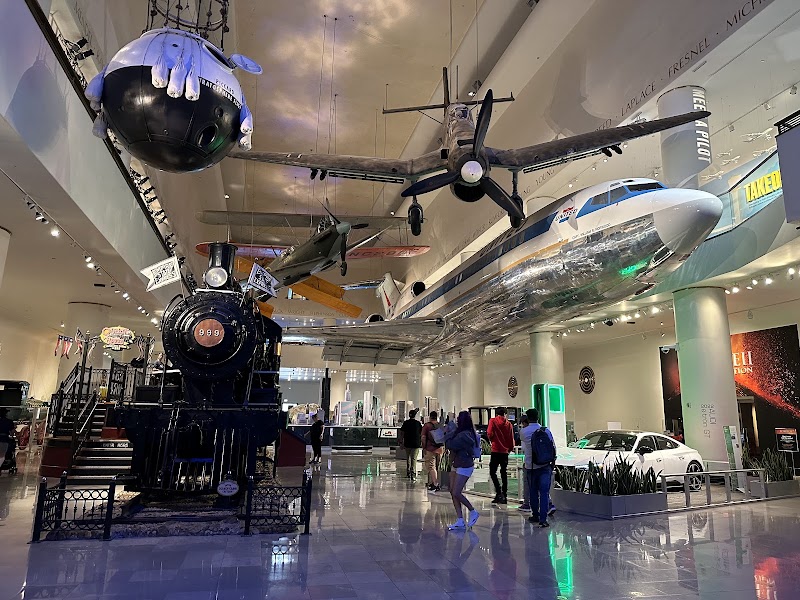
- The Kenneth C. Griffin Museum of Science and Industry — housed in the fair’s Palace of Fine Arts, the only major exposition building to survive, and home to the German submarine U-505, captured in 1944 and displayed here since the 1950s.
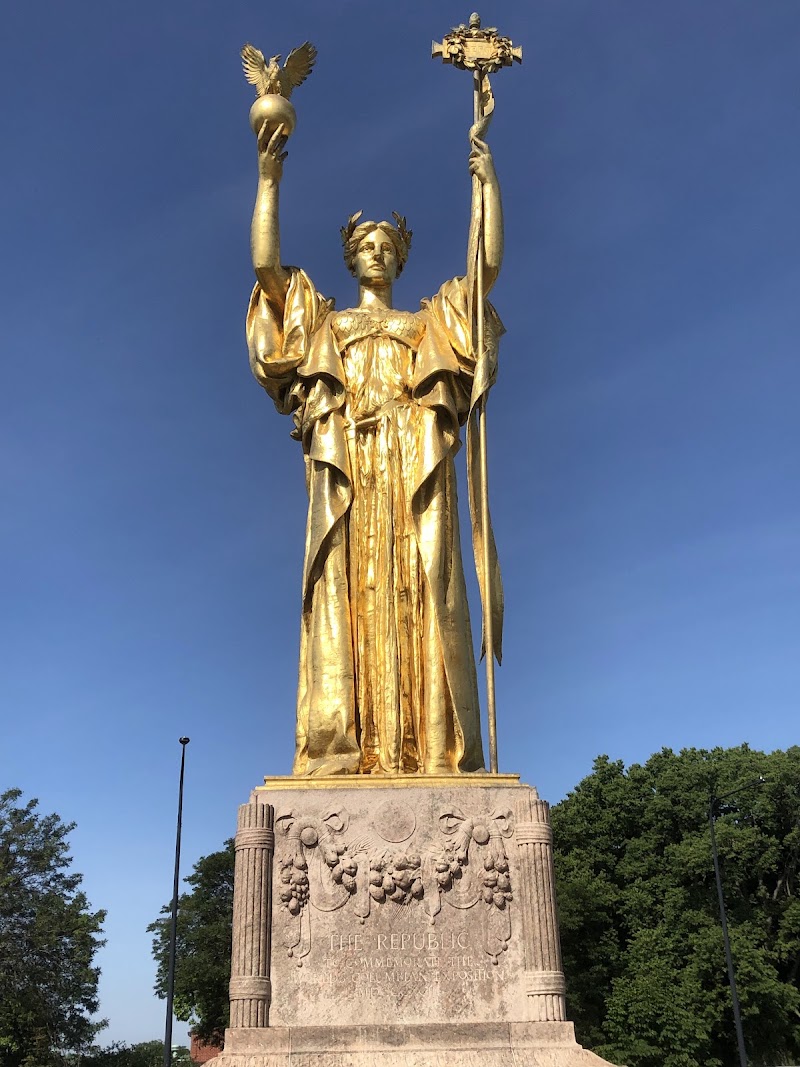
- The Statue of the Republic — Daniel Chester French’s gilded bronze figure of 1918, about 24 feet tall on a pedestal by Henry Bacon, a one-third reduction of the colossus that stood over the fair’s Court of Honor.
- The Paul H. Douglas Nature Sanctuary and Bobolink Meadow — restored woodland, savanna and prairie that make up an Audubon-recognized Important Bird Area and one of the best-known migration stops in the region.
- The lagoons and the Columbia Basin — surviving water bodies of the fair, ringed by more than 170 Japanese cherry trees planted in 2012 and 2013 and now flowering each spring.
- The 63rd Street Beach House — a Classical Revival bathing pavilion completed in 1919, a designated Chicago Landmark and the oldest beach house in the city’s park system.
What you’ll find
Jackson Park operates as several parks at once — a formal historic landscape, a working neighborhood recreation ground, a harbor district and a nature preserve, all inside one boundary. Very little of it is signposted as a monument, which is part of the pleasure: you come across the fair’s remains while walking to the beach.
- An 18-hole public golf course with a driving range, opened in 1899 as the first public course west of the Alleghenies and free to play until 1920.
- Two lake beaches, 57th Street Beach and 63rd Street Beach, lifeguarded through the summer season.
- A harbor complex with inner and outer basins for sailing, moorings and boat launching.
- A field house with a gymnasium and fitness room, plus tennis and pickleball courts, ball fields and basketball courts serving the surrounding neighborhoods.
- The Clarence Darrow Memorial Bridge over the lagoon, named for the lawyer who lived nearby and used as the traditional meeting point for birding walks.
- The Obama Presidential Center on the park’s western side, designed by Tod Williams Billie Tsien Architects around a museum tower some 235 feet tall, under construction since September 2021.
Things to do — and who it’s for
- History travelers — the afterlife of the 1893 fair is legible entirely on foot: statue, palace, basin and island fall into a single loop of two or three hours.
- Birdwatchers — spring and autumn migration through Wooded Island and Bobolink Meadow draws serious observers from across the Midwest, with organized walks in season.
- Families — the museum, the beaches and the open meadows will fill an entire day without a car, and the train drops you between them.
- Golfers — a genuinely historic municipal course in a lakefront setting, with one par-5 running along the harbor.
- Quiet seekers — the Japanese garden is the calmest corner in any large Chicago park, and early morning there is close to solitary.
- Runners and cyclists — the Lakefront Trail reaches its southern end here, at the close of an eighteen-mile ride along the water.
Getting there & practical
The park lies on the South Side, touching the Hyde Park, Woodlawn and South Shore neighborhoods, and rail access is unusually generous for a Chicago park. Metra Electric District trains stop at 55th-56th-57th Street, at 59th Street beside the university, and at 63rd Street; the South Shore Line, running through from Indiana, calls at two of the same platforms, and the Green Line ‘L’ terminates a short walk to the west. Between them these stations put you within walking distance of every major feature, so there is no reason to drive the park end to end. Entry to the park, the lagoons, the Japanese garden, the nature areas and the beaches is free. The museum charges its own separate admission and is busy on weekends and school holidays; golf, boat moorings and organized programs are also paid. The grounds are open daily from early morning to late evening, with the field house on its own schedule. Give the historic circuit two to three hours on foot, or a full day if you add the museum — which deserves to be treated as a destination rather than a stop.
When to visit
Spring is the park’s strongest season, week for week: cherry blossom around the Columbia Basin in late April, and the migration wave that fills Wooded Island with warblers through May, when the birding paths are busiest at dawn. Summer brings swimming, sailing and very long light, and is the only period when the beaches genuinely work — weekends are crowded, weekday mornings quiet, and the lagoons at their greenest. Autumn turns the lagoon edges and the Japanese garden to color, and a second migration passes through, quieter and more spread out than the spring rush; September and October are the most comfortable months to walk the whole park. Winter empties the place almost entirely, and that is precisely when the classical architecture, the bare island and the frozen water read most clearly.
Good to know
The South Park Commission acquired the land in 1869, and Olmsted and Vaux — fresh from Central Park — drew their plan in 1871 for a 1,055-acre system linking this park, Washington Park and the mile-long Midway Plaisance between them. It was renamed in 1880 for Andrew Jackson, the seventh president. At the far western end of that Midway, in Washington Park, stands Lorado Taft’s Fountain of Time, completed in 1922 and nearly 127 feet long — the only piece ever built of Taft’s grand scheme to line the Midway with a canal and sculptural bridges. When Chicago won the 1893 World’s Columbian Exposition, Olmsted returned to convert the neglected shoreline into fairgrounds alongside Daniel H. Burnham and John Wellborn Root. The fair opened on May 1, 1893, and drew attendance counted in the tens of millions before closing that autumn; most of the plaster-clad buildings burned in the months that followed. The Palace of Fine Arts, designed by Charles B. Atwood and the only fireproof structure on the grounds, survived, was rebuilt in stone, and reopened in 1933 as the Museum of Science and Industry with a $5 million gift from Julius Rosenwald; it was renamed for Kenneth C. Griffin in May 2024 following a $125 million donation. On the island, the Ho-o-den pavilion was dedicated on March 31, 1893 — modeled on the Phoenix Hall of the Byodo-in temple at Uji, conceived by Kakuzo Okakura with the architect Masamichi Kuru, and chosen partly because the phoenix answered Chicago’s own rebirth after the fire of 1871. Japan presented it to the city when the fair closed, and added a tea house and a further garden for the 1933 Century of Progress. Both were destroyed by fire after the Second World War and the garden fell into decades of neglect. The Chicago-Osaka sister-city relationship, established in 1973, revived interest; the garden was renamed the Osaka Japanese Garden in 1993 for the partnership’s twentieth anniversary, and became the Garden of the Phoenix in 2013.
Visitor tips
- Reach the Japanese garden early in the day. It is small, and a single tour group changes its atmosphere completely; the first hour after opening is worth the alarm clock.
- Carry binoculars in May and September. The island paths are narrow, the canopy is low, and the best sightings happen at eye level rather than overhead.
- Treat the museum as a separate outing rather than an add-on. A serious visit needs half a day on its own, and trying to combine it with the full park circuit means rushing both.
Questions & answers
What remains from the 1893 world’s fair? The Palace of Fine Arts, now the museum; the lagoons, Wooded Island and the Columbia Basin; the Japanese garden’s site and lineage; and the 1918 Statue of the Republic, a one-third version of the original colossus.
Is Jackson Park free? The park, gardens, nature areas, trails and beaches are free to enter. The museum charges separate admission, and golf, boat moorings and organized programs are paid.
What is the Osaka Garden? The Japanese garden on Wooded Island, officially the Garden of the Phoenix since 2013. It traces directly to the 1893 Ho-o-den pavilion and carried the name Osaka Japanese Garden from 1993, marking twenty years of the Chicago-Osaka sister-city relationship.
Can you swim here? Yes, at 57th Street Beach and 63rd Street Beach during the lifeguarded summer season. The 63rd Street Beach House of 1919 is the oldest in the city’s parks and a designated landmark.
How do you get there by train? Metra Electric District stops at 55th-56th-57th Street, 59th Street and 63rd Street leave every major feature within walking distance, and the South Shore Line serves two of the same platforms.
Is the Obama Presidential Center inside the park? Yes. It is being built on the park’s western side to a design by Tod Williams Billie Tsien Architects; ground was broken in September 2021, and the surrounding landscape is being rebuilt along with it.
Photos
Show 1 more photos
Visitor reviews
Reviews last updated: 2026-08-04 16:02:05
Data is refreshed monthly. Sources: chicagoname.com and editorial picks based on reviews.
Wonderful grounds. You could almost forget that they're in Chicago, the greatest city in America.
The perfect place to see the cherry blossoms and visit the museums. The Japanese gardens are a hidden gem… love i5
When you're here, it's easy to forget you're in the city! Lots of room for walking, jogging, open fields and so on. They even have a practice field and a dog park. Just so you know, you can't bring your dog into the Japa…
Fomos no Park em Abril para ver as cerejeiras, mas ainda não estavam tão floridas. Não valeu tanto o passeio dessa vez…
Crowded. We went to see the cherry blossoms. It needs a lot of attention. Too many people walk on the roots, which harms the trees.
The bridge is out of service and isn't being repaired. I saw a big catfish jump, and tha…