

Park · Chicago · ⭐ 9.5/10 · 21005 reviews · updated: 2026-08-04 16:02:03
Address: 331 E. Randolph St N Columbus Dr, Chicago, IL 60601, United States
Grant Park — Chicago’s front yard, forever open and free
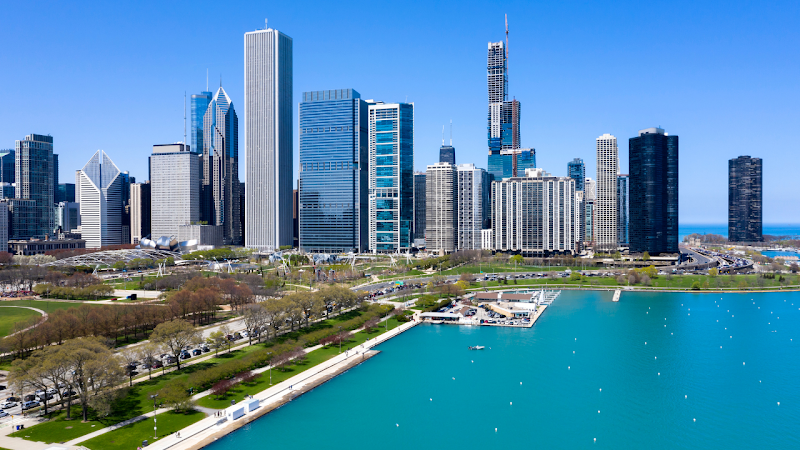
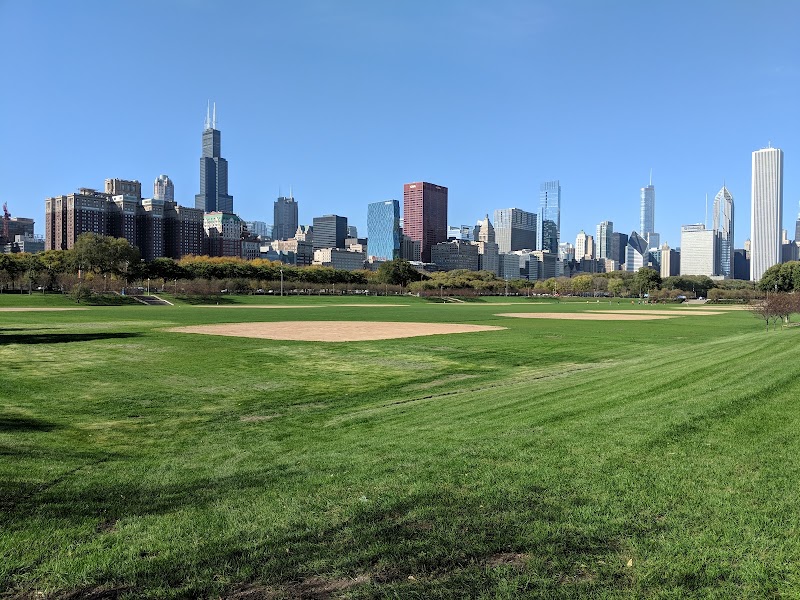
Three hundred and nineteen acres of lawn, fountain and festival ground stretch between the Loop’s wall of towers and the open water of Lake Michigan. Chicagoans have called Grant Park the city’s front yard for more than a century, and they mean it literally: a mail-order merchant took the city to the Illinois Supreme Court four times to keep this ground clear of buildings, and he won every time. The result is a Beaux-Arts park where a rococo fountain throws water 150 feet into the air, a crowd of 106 headless iron figures walks nowhere at all, and a summer’s worth of festivals rolls across lawns that legally can never be built on.
Highlights
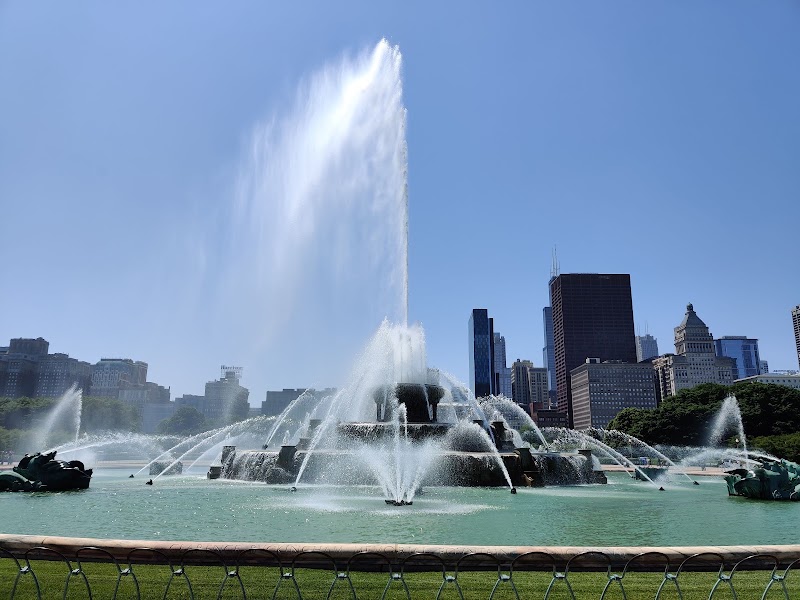
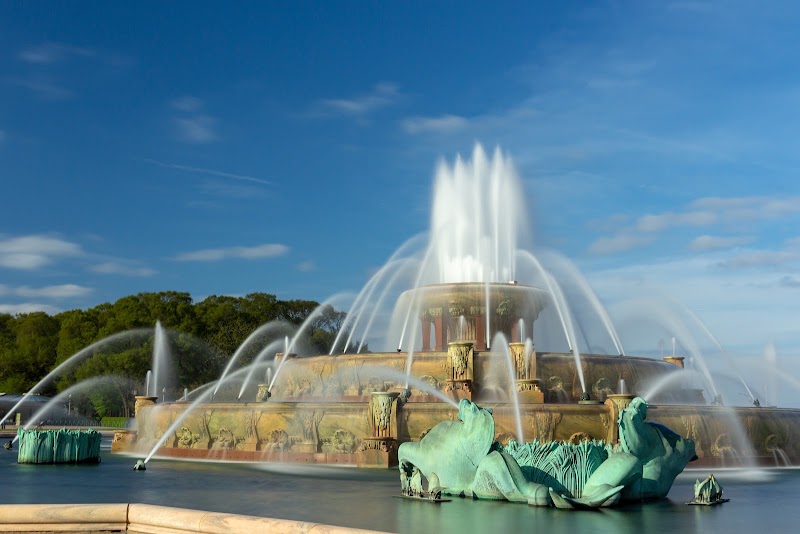
- Buckingham Fountain — dedicated on August 26, 1927 and modeled on the Latona Basin at Versailles at twice the scale. Edward H. Bennett designed it, French sculptor Marcel Loyau made the figures and engineer Jacques Lambert built it: Georgia pink marble, three tiers, 193 jets, 1.5 million gallons in circulation and a central plume that climbs 150 feet.
- The bronze sea horses — four pairs by Loyau guard the basin, one pair for each state that touches Lake Michigan: Illinois, Indiana, Michigan and Wisconsin. Kate Sturges Buckingham gave the fountain as a memorial to her brother Clarence and left an endowment so the city would never have to pay for its upkeep.
- The Bowman and The Spearman — Ivan Meštrović’s two 17-foot bronze Native riders, designed in 1926, cast in Zagreb and dedicated in 1928 on granite pedestals by Holabird & Roche. Contrary to a stubborn local legend, the bow and spear were never stolen: the sculptor deliberately left the weapons to the viewer’s imagination.
- Agora — Magdalena Abakanowicz’s 106 headless, armless iron figures, nine feet tall, each a hollow seamless casting left to rust into a bark-like skin. Made near Poznań between 2004 and 2006 and positioned by the artist herself in October 2006, they were a gift from Abakanowicz and Poland’s Ministry of Culture.
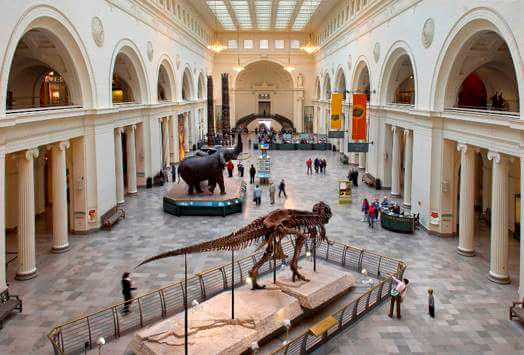
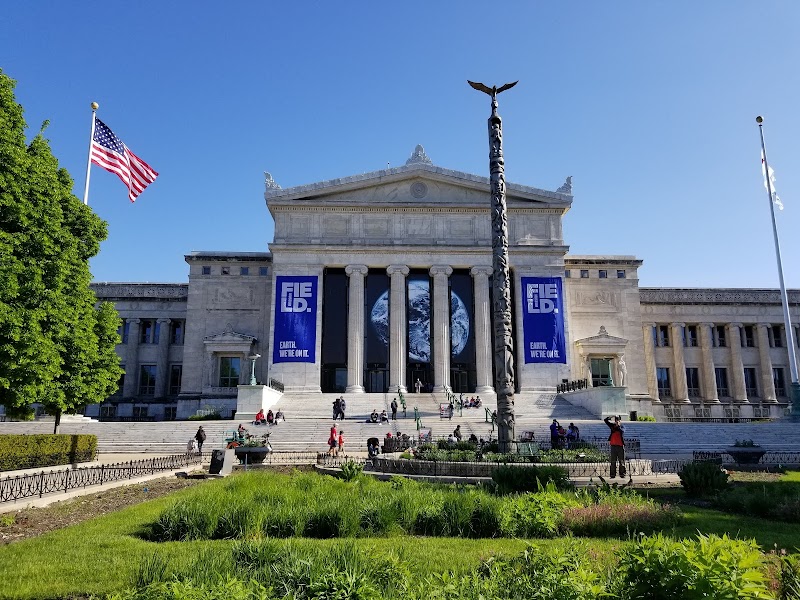
- Museum Campus — 57 lakeside acres opened on June 4, 1998, after a highway’s northbound lanes were shifted west in 1996 and freed 36 acres. It binds the Field Museum, the Shedd Aquarium and the Adler Planetarium — the first planetarium in the Western Hemisphere — into a single walkable landscape.
- The Art Institute of Chicago — the park’s western anchor since 1893, and the rare building the Ward rulings allowed to stay, because the adjoining property owners had consented to it.
What you’ll find
The park reads as a chain of outdoor rooms — formal and symmetrical around the fountain, looser at the edges, and elastic enough to swallow a hundred thousand people when a festival takes over.
- Butler Field and Hutchinson Field, the two great lawns that carry Lollapalooza’s main stages each summer.
- The Petrillo Music Shell, named for the long-serving musicians’ union chief James C. Petrillo, and home to the blues, gospel and jazz festivals.
- Millennium Park, the 24.5-acre modern quarter in the northwest corner, opened in 2004 on a deck over the rail lines.
- Maggie Daley Park, rebuilt in 2014-2015 on the old Daley Bicentennial Plaza with a quarter-mile skating ribbon, climbing walls and a fantasy play garden.
- Formal rose gardens, elm allées and the symmetrical promenades drawn to Edward H. Bennett’s Beaux-Arts plan of the 1920s.
- The start and finish lines of the Chicago Marathon, run here each October since 1977.
Things to do — and who it’s for
- Festival crowds — Lollapalooza has camped on the lawns since 2005 and now runs four days; Taste of Chicago closes the season in early September with free entry and live stages.
- Families — Maggie Daley Park’s climbing towers, slides and play garden reliably absorb a full afternoon, and the skating ribbon runs all winter.
- Evening walkers — the fountain’s colored light-and-music finale runs after dark right through the warm season, and the basin is floodlit until closing.
- Museum-goers — three world-class institutions sit within a ten-minute walk of each other, each with its own tickets and hours.
- Runners and cyclists — the Lakefront Trail follows the park’s entire eastern edge, fully separated from traffic.
- Art walkers — Agora, the Meštrović riders and the Art Institute’s bronze lions make a free open-air gallery you can cross in half an hour.
Getting there & practical
Grant Park forms the Loop’s eastern edge, so transit is trivial. Washington/Wabash and Adams/Wabash serve the elevated Brown, Green, Orange, Pink and Purple lines; the Red Line subway stops at Lake, Monroe, Jackson and Harrison; and for Museum Campus the Red, Green and Orange lines share Roosevelt. Metra Electric runs beneath the park to Millennium Station. The park itself is free and open daily from 6 a.m. to 11 p.m., while the museums keep their own hours and sell their own admission. An hour is enough for the fountain and the sculpture; give it a full day if you add a museum, and expect fenced lawns and rerouted paths during the big festivals.
When to visit
The fountain sets the calendar: it runs from early May to mid-October, spouting for twenty minutes at the top of each hour between 8 a.m. and 11 p.m. and finishing every evening in colored light and music. Summer is festival season — blues in June, Lollapalooza at the height of the heat, Taste of Chicago in early September — and the lawns are loud, fenced and full. Autumn empties them again, turns the elms gold and hands the park back to marathon runners and photographers. Winter drains the basin and leaves a stark, wind-scoured plain, but that is when the skyline looks most theatrical, especially with snow on the formal terraces.
Good to know
The canal commissioners set the land aside in 1835-1836, marking the lakefront strip public ground “to remain forever open, clear and free of any buildings, or other obstruction whatever.” The city named it Lake Park in 1844 and renamed it in 1901 for President Ulysses S. Grant. Much of the ground underfoot is rubble from the Great Chicago Fire of 1871, dumped into the shallows behind the railway breakwater to make new land. Then came the lawsuits. Aaron Montgomery Ward, the mail-order magnate whose office windows faced the park, brought four cases to the Illinois Supreme Court between 1897 and 1910 to enforce that 1836 promise. City of Chicago v. Ward in 1897 established that the dedication was binding; Bliss v. Ward in 1902 stopped a National Guard armory; Ward v. Field Museum in 1909 kept the Field Museum out of the park’s center, pushing it south onto newer landfill where it stands today. Ward was called a public nuisance for his trouble and saved the lakefront anyway. Edward H. Bennett, who co-authored the 1909 Plan of Chicago with Daniel Burnham, then laid out the formal scheme still visible. The lawns hosted the violent 1968 Democratic convention protests and, on November 4, 2008, Barack Obama’s election-night rally.
Visitor tips
- Stand on the fountain’s western side near sunset — the water is backlit and the downtown towers rise directly behind it, which is why this is the most photographed angle in the park.
- During Lollapalooza most of the central lawns are fenced and ticketed, but the fountain, the sculpture and Museum Campus stay open to everyone.
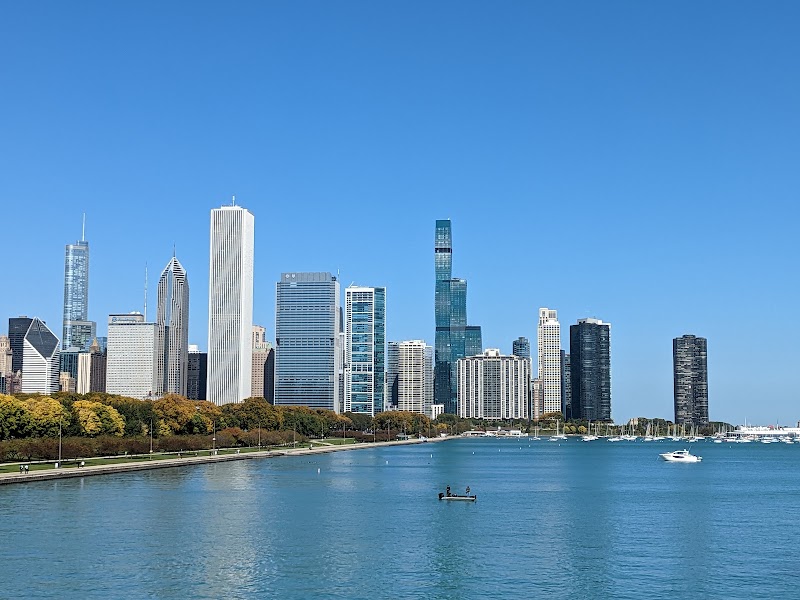
- Walking from the Art Institute out to the Adler Planetarium takes about 35 minutes and delivers the single best skyline view in the city, looking back across the water.
Questions & answers
Is Grant Park free to enter? Yes, always — the 1836 dedication requires it. Ticketed festivals fence off parts of the lawns temporarily, and the museums charge their own admission.
When does Buckingham Fountain run? Early May through mid-October, roughly 8 a.m. to 11 p.m., with a twenty-minute display each hour and a light-and-music finale after dark.
Why is it called Chicago’s front yard? Because it is the open ground between downtown and the lake that nobody is permitted to build on — by law, the city’s public face.
Where exactly is Lollapalooza held? On the central and southern lawns, Butler and Hutchinson Fields, for four days each summer since 2005.
Is Millennium Park part of Grant Park? Yes. It is a 24.5-acre section in the northwest corner, opened in 2004 and managed separately by the city’s cultural affairs department.
Who was Montgomery Ward and why does he matter here? A mail-order retailer who sued the city four times between 1897 and 1910 to enforce the park’s founding dedication, blocking an armory, a civic center and the Field Museum from the lawns.
How much time do I need? An hour for the fountain and the sculpture; a full day if you add Museum Campus or the Art Institute.
Photos
Show 1 more photos
Visitor reviews
Reviews last updated: 2026-08-04 16:02:03
Data is refreshed monthly. Sources: chicagoname.com and editorial picks based on reviews.
A lovely city park! A well-kept and clean park. It has several monuments and the amazing Buckingham Fountain! On weekends the park isn't very crowded, which lets you take a peaceful walk in nature! The Agora is also a gr…
Very beautiful. You have to see it, if only for your general education.
Quiet area of the city, which slips through the fingers of time!
Grant Park is a beautiful green space in the heart of Chicago with stunning skyline views and the iconic Buckingham Fountain. It’s the perfect place for a relaxing walk, a quick break, or simply soaking in the city’s atm…