

Park · Chicago · ⭐ 9.5/10 · 20864 reviews · updated: 2026-08-04 16:02:03
Address: 500-5700 N Lake Shore Dr, Chicago, IL 60614, United States
Lincoln Park — seven miles of lakefront, a free zoo and a Victorian glasshouse
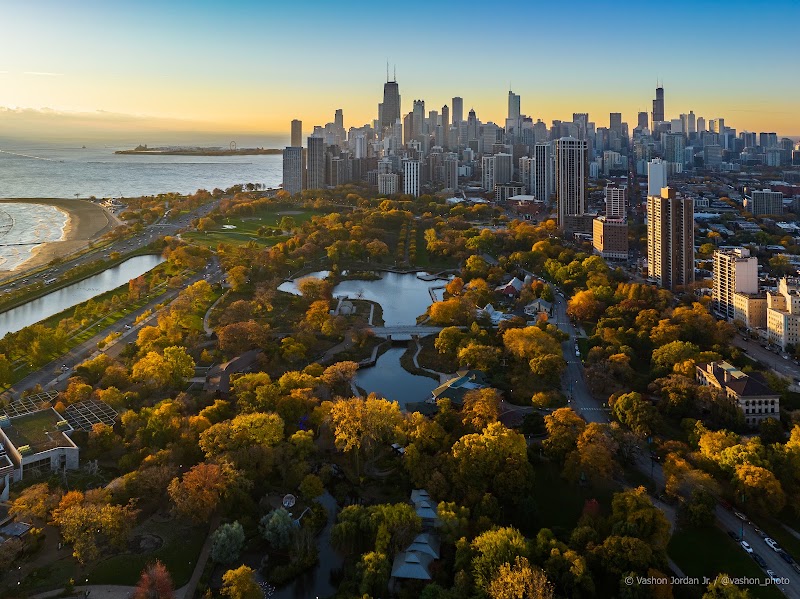
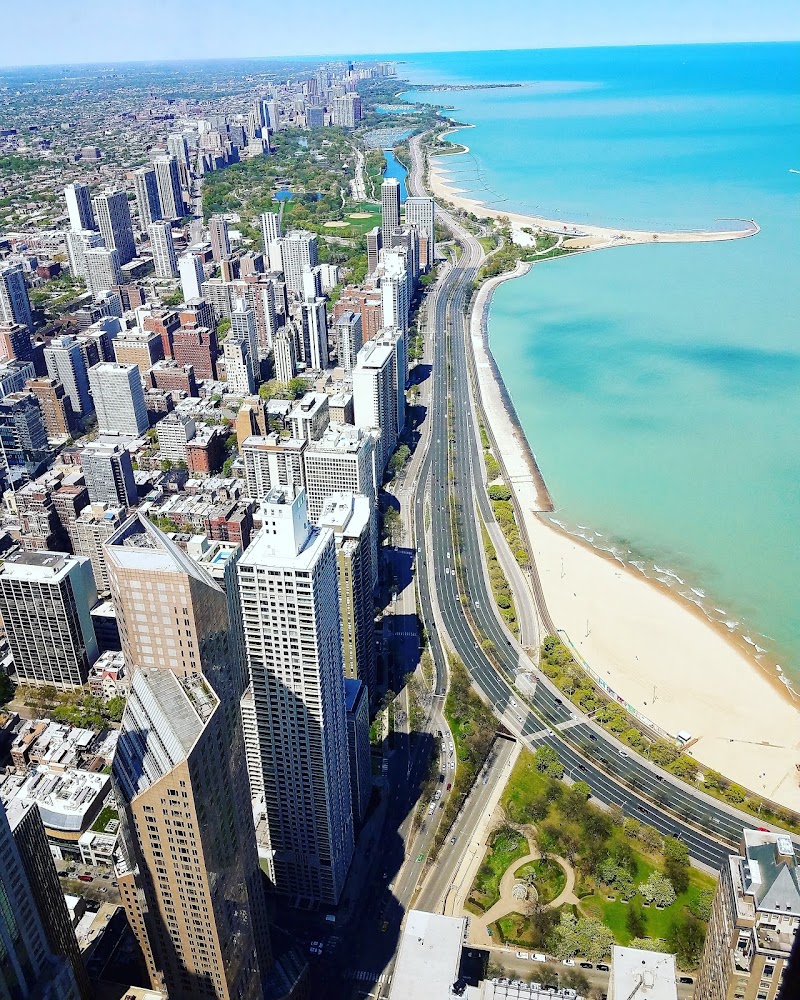
At 1,208 acres, Lincoln Park is the largest park in Chicago and, by most counts, the second-most-visited city park in the United States after Central Park, with roughly 20 million people a year. It runs seven miles up the North Side lakefront and packs a free zoo, a Victorian conservatory, a nature museum, seven public beaches, three harbors, a golf course and a National Historic Landmark garden into that green ribbon. It began, improbably, as the city cemetery — and not everyone buried here was moved.
Highlights
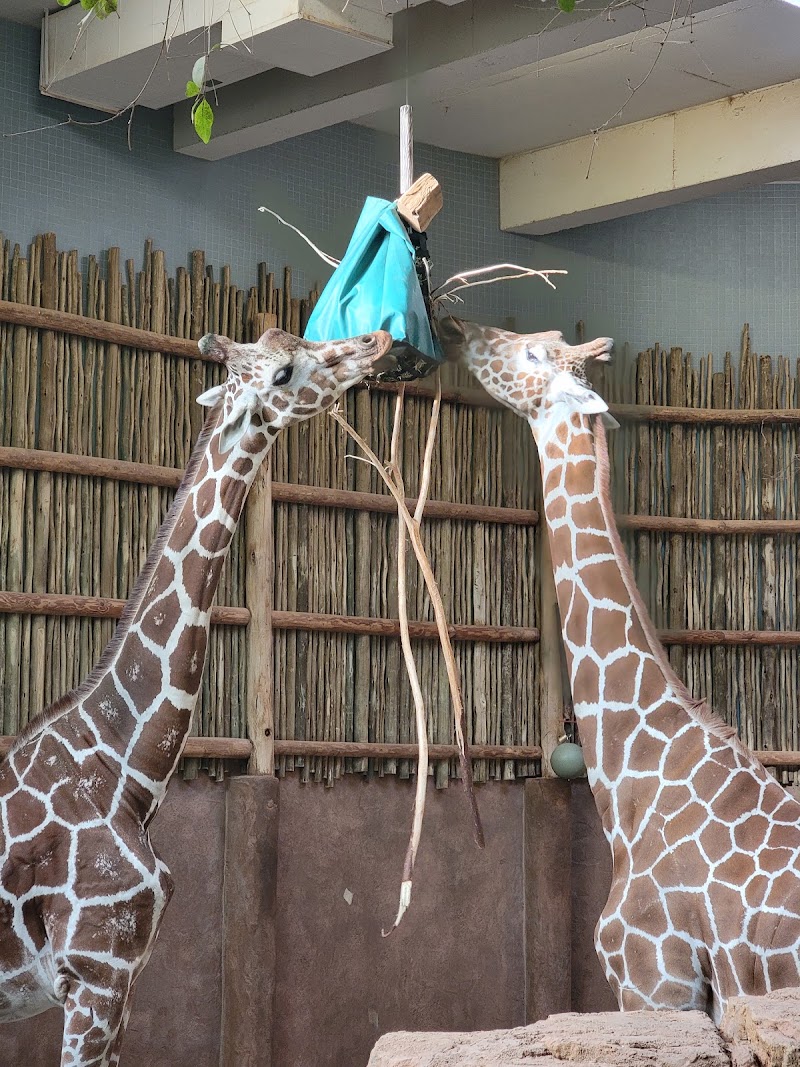
- Lincoln Park Zoo — founded in 1868 when the commissioners of New York’s Central Park sent two pairs of swans as a gift. Today it covers 35 acres with roughly 1,100 animals of about 200 species, draws some 3.4 million visitors and still charges nothing, 365 days a year. It gained accredited arboretum status in 2019.
- Lincoln Park Conservatory — a Victorian glasshouse built between 1890 and 1895 by Joseph Lyman Silsbee, the architect who once employed a young Frank Lloyd Wright, with Mifflin E. Bell. Four display halls and fifteen propagating houses sit under ogee-arched trusses; the Palm House holds a fiddle-leaf rubber tree planted in 1891 that now reaches roughly 50 feet, and the Fern Room grows prehistoric cycads.
- Alfred Caldwell Lily Pool — a Prairie School landscape of stratified limestone ledges, a hidden pond and a council ring, built in 1936-1938 with Works Progress Administration labor. It was declared a National Historic Landmark in 2006 and reopened in September 2025 after a further restoration.
- Peggy Notebaert Nature Museum — home since 1999 to the Chicago Academy of Sciences, founded in 1857 by naturalists Robert Kennicott and William Stimpson and the oldest science museum in Illinois. Its Judy Istock Butterfly Haven keeps more than 200 native and exotic species in free flight.
- Montrose Point Bird Sanctuary — fifteen acres known as the Magic Hedge, a Tartarian honeysuckle screen the US Army planted to camouflage a Cold War Nike missile base. Birders lobbied for it after the Army left, and more than 300 species have been recorded on migration.
- North Avenue Beach — the city’s busiest strand, fronted by a 22,000-square-foot beach house completed in 1999 in the shape of an Art Moderne ocean liner, echoing the 1940 WPA original it replaced.
What you’ll find
The park is really a chain of very different landscapes strung along the water, and walking north you pass from formal lawns to harbor masts to wild bird sanctuary in the space of an afternoon.
- Seven public beaches, among them Fullerton, Montrose, Foster and Osterman, with lifeguarded swimming in summer.
- Diversey, Belmont and Montrose harbors, dense with masts from spring through autumn.
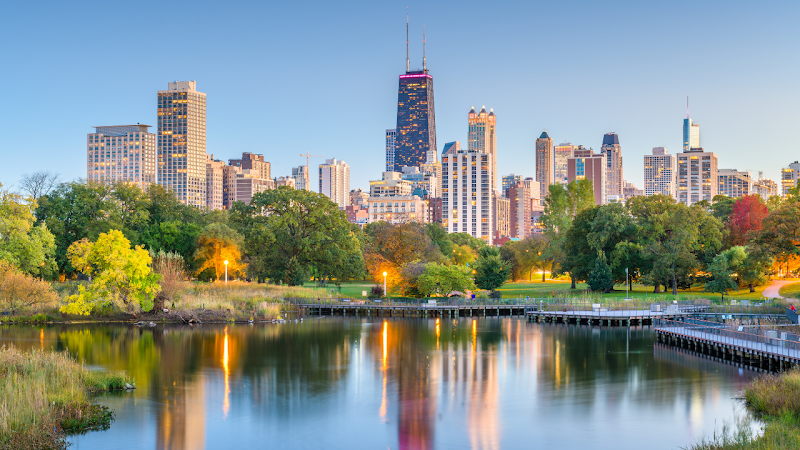
- North Pond, a ten-acre restored nature sanctuary whose still water mirrors the downtown skyline — the classic Chicago postcard shot.
- Theater on the Lake, a Prairie-style pavilion designed in 1913 by Dwight Perkins and built in 1920 as the Chicago Daily News Fresh Air Sanitarium; it treated around 30,000 children each summer until 1939.
- The Chicago History Museum, successor to the Chicago Historical Society of 1856, which holds the bed Abraham Lincoln died in.
- A nine-hole lakeside golf course under the Waveland clock tower, tennis courts, ball fields, and the Lakefront Trail — 18 miles overall, with bike and pedestrian paths separated since 2018.
Things to do — and who it’s for
- Families — the free zoo plus Farm-in-the-Zoo, opened in 1964, plus the Nature Boardwalk wetland added in 2010 makes a whole day out that costs nothing at all.
- Birdwatchers — Montrose Point is one of the Midwest’s great migration traps; early May and mid-September are the two peaks, and local birders are famously generous with a scope.
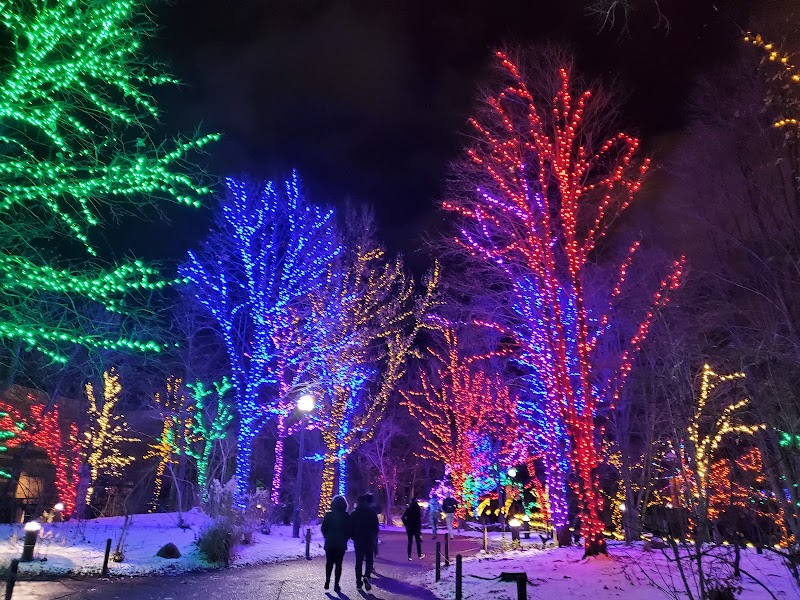
- Winter visitors — the conservatory stays humid and tropical when the lake freezes, and ZooLights fills the zoo with illuminated displays after dark.
- Runners and cyclists — the Lakefront Trail gives an uninterrupted, car-free route the entire length of the park and well beyond it in both directions.
- Animal lovers — the Pepper Family Wildlife Center, opened in 2021, holds African lions, snow leopards, Canada lynx and red pandas, and the Regenstein Macaque Forest gives Japanese macaques their own hot spring.
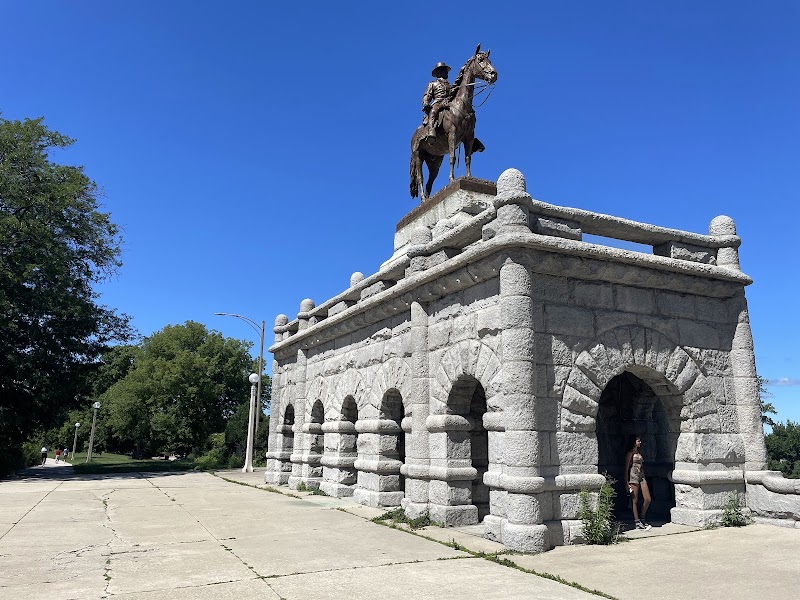
- History walkers — Augustus Saint-Gaudens’ Standing Lincoln of 1887, Louis Rebisso’s Grant Memorial of 1891 and monuments to Shakespeare, Goethe and Hans Christian Andersen mark the park’s Victorian layer.
Getting there & practical
The park backs onto the Lincoln Park, Old Town, Lakeview, Uptown and Edgewater neighborhoods, so the Red, Brown and Purple lines all serve it. Fullerton station is the main gateway, a short walk from the zoo, the conservatory and the nature museum; Armitage and Sedgwick on the Brown Line reach the southern end, North/Clybourn on the Red Line puts you closest to the beach, and Belmont, Addison, Sheridan, Wilson and Lawrence step you steadily north along the park. Several bus routes stop at the zoo gates. The park, the zoo and the conservatory are all free; the Nature Museum and the History Museum sell tickets. The park is open 6 a.m. to 11 p.m., with the zoo and glasshouses closing considerably earlier. Allow half a day at minimum, and a full day if you take in the zoo properly.
When to visit
Spring is migration and bulbs: warblers crowding Montrose Point in the first half of May, azaleas under glass in the conservatory show house while the lakefront is still raw. Summer belongs to the beaches, the harbors and the crowds, with the zoo at its busiest on hot weekend afternoons and the North Pond path a cool alternative. Autumn is the walker’s season — North Pond doubling the gold of the trees, the trail nearly empty, the light long across the water and a second wave of migrants passing through. Winter is starker and better than visitors expect: the glasshouses are tropical, ZooLights runs after dark, and ice shelves build along the beaches into shapes worth the cold.
Good to know
The land opened in 1843 as the City Cemetery, where Chicago buried its cholera dead. Doctors argued that shallow graves so close to the lake and the drinking-water intake were poisoning the living, and in 1864 the city council voted to convert the burying ground into parkland. It was renamed for Abraham Lincoln in 1865, weeks after his assassination, and the Swedish-born gardener Swain Nelson drew the first landscape plan the same year. An estimated 35,000 bodies were relocated; not all of them were found, and construction crews still turn up remains. One tomb never left — the Couch mausoleum, built in 1858, stands exactly where it always did, just behind the History Museum. The zoo grew from that 1868 gift of swans; its first purchase, in 1874, was a bear cub bought from Philadelphia for ten dollars. The Lily Pool has its own strange arc: Alfred Caldwell, a disciple of Jens Jensen, spent his own salary on plants for it, then watched it decline into a zoo bird enclosure known as the Rookery through the 1950s before a $2.4 million restoration by the park district and the Lincoln Park Conservancy brought it back between 1998 and 2002.
Visitor tips
- Enter the zoo from the southern side near the lily pool — it is the quieter gate, and the pool itself is a five-minute detour that most visitors never make.
- In May, walk Montrose Point before nine in the morning; the hedge fills with migrants and the regulars there will happily point out what you are looking at.
- The conservatory is the best rainy-day and deep-winter stop in the whole park, it costs nothing to enter, and the seasonal flower shows in the Show House change four times a year.
Questions & answers
Is Lincoln Park Zoo really free? Yes. It has never charged admission, opens 365 days a year, and is one of only a handful of free major zoos in the United States.
Is the whole park free? The park, the zoo and the conservatory are free. The Peggy Notebaert Nature Museum and the Chicago History Museum both charge admission.
How big is it? About 1,208 acres spread over seven miles of lakefront — comfortably the largest park in the city and the second-most-visited in the country.
Was it really a cemetery? Yes, from 1843 until the 1860s. Roughly 35,000 burials were relocated, remains still surface during construction, and one mausoleum was deliberately left in place.
Which beach should I choose? North Avenue Beach for energy and volleyball, Montrose for space and windsurfing, Foster for quiet.
Why is Montrose Point called the Magic Hedge? Because the honeysuckle the Army planted to hide a missile base turned out to be a magnet for migrating songbirds, and birders named it before the city protected it.
How do I get there without a car? Fullerton station on the Red, Brown and Purple lines is the main gateway, and several bus routes stop right at the zoo gates.
Photos
Show 1 more photos
Visitor reviews
Reviews last updated: 2026-08-04 16:02:03
Data is refreshed monthly. Sources: chicagoname.com and editorial picks based on reviews.
A fantastic experience for everyone. If you're expecting the best zoo in the world, remember that this place is free. But even with that expectation, it's a great place. My only complaint is that the food area seems to b…
We spent 3 hours there and still couldn't see the whole zoo. It's very well organized, the animals looked great… usually I'm not a fan of zoos because of their capitalist mentality. This zoo has been free for decades,…
A great place to relax and do sports, to go cycling in Chicago; a park on the shore of Lake Michigan, with a zoo, beaches and lots of picnic spots inside.