

The name of Clair Patterson is known not only in the USA but all over the world because he was the first scientist to calculate the exact age of the Earth. The geochemist also devoted half of his life to conducting research and proving that lead compounds pose a danger to the environment and humans, writes chicagoname.com.
Great scientific discoveries
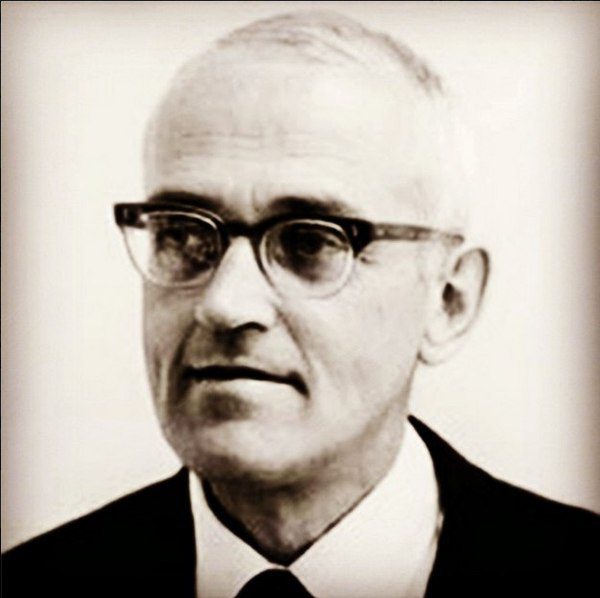
Clair was born in the small town of Mitchellville, Iowa. From a young age, the boy was interested in chemistry and already in the eighth grade, he was telling his teachers things they were unaware of. In 1943, Patterson earned a degree in chemistry. Believe it or not, it happened in just 9 months. Clair’s talent for chemistry convinced the American Council not to call him up for military service. In their opinion, the chemistry prodigy should work in a laboratory. In 1944, Patterson was invited to take part in the Manhattan Project aimed at manufacturing American weapons at a secret plant in Oak Ridge, Tennessee. There, the young and talented scientist separated uranium isotopes employing mass spectrometry technique. Soon after, Clair earned a Ph.D. from the University of Chicago.
In Chicago, Patterson worked under the close guidance of nuclear chemist Harrison Brown. The latter set his team an extensive task that seemed impossible at that time. They had to determine the age of ancient subsurface rocks using the isotope technique and thereby find out the age of the Earth. It is worth noting that many scientists have tried to do this before, but no one has succeeded. The main challenge for Clair was to find the oldest rocks possible. Technical equipment was supposed to do the rest.
The scientist was struck with a brilliant idea while searching for methods to calculate the age of the Earth. He needed to measure the ratio of uranium and lead in meteorites, which likely hardened at the same time as the Earth. Several tens of thousands of years ago, a meteorite fell in the state of Arizona, the remains of which are still found today. This place is now called Canyon Diablo. In 1953, Patterson measured the uranium-lead ratio in fragments of the Arizona meteorite and found that its age was 4.55 billion years. It turned out that our planet is much older than previously thought. The figure obtained by Patterson was recognized by the scientific community as the age of the Earth’s crust. In 1956, Clair published his discovery in a scientific journal.
Atmospheric protection
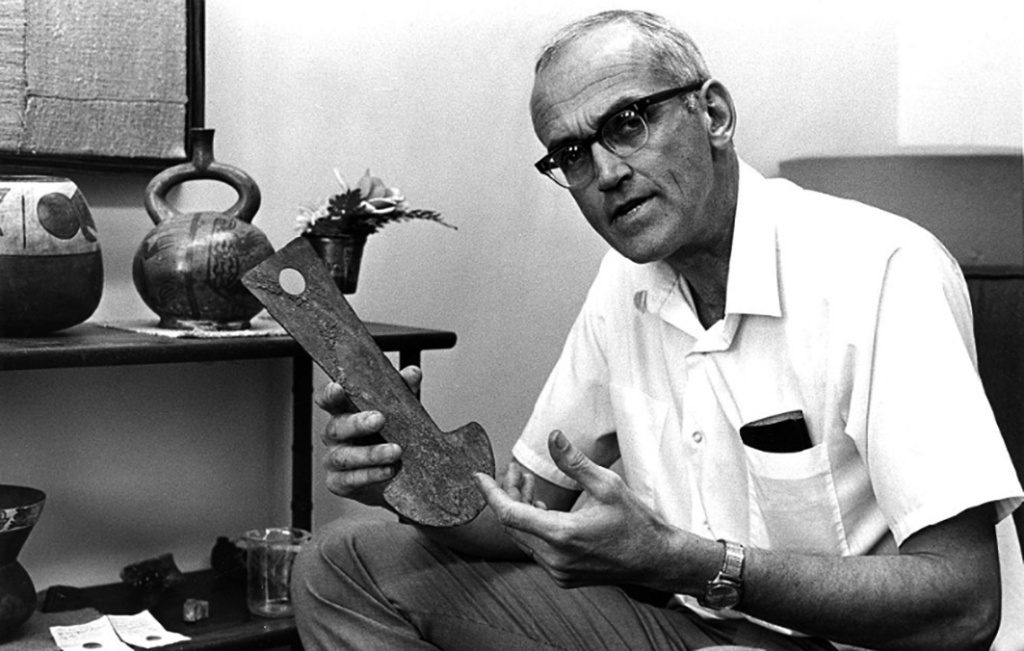
Immediately after studying the Earth, Patterson spent all his time determining the levels of lead saturating and polluting the atmosphere. The scientist had to put in a lot of effort to prove that lead levels were increasing in the air. Yet, he managed to do it.
Patterson began studying glaciers in Greenland. Measuring the level of lead in each layer, he confirmed his assumption. Later, the scientist, without the support of the authorities or the public, started a campaign against the lead industry. Soon, Clair became a problem for the California Institute where he worked. People of influence involved in the lead business pressured the administration of the higher education institution to silence him. Despite strong pressure, Patterson stayed faithful to his convictions.
After years of struggle, Clair’s efforts led to the passing of the Clean Air Act in the United States in 1970. Shortly after, ethyl gasoline was withdrawn from sale in the country. If not for Patterson’s research, it is unknown how long the concentration of lead would have accumulated in the air, which would eventually lead to human deaths. Additionally, the ozone layer would have continued to be depleted, causing harm to animals and plants.
Clair Patterson passed away in 1995 from an asthma attack. Thanks to his efforts and contributions he made to people and the environment, the scientist became a member of the National Academy of Sciences. An asteroid was also named in his honor.