Libbie Hyman is considered one of the most influential zoologists of her time. She single-handedly wrote and illustrated an unprecedented six-volume, 4,000-page treatise on the approximately one million species of invertebrates. How did she accomplish this monumental task? We dive chicagoname.com deeper into her story below.
Early Life and Education
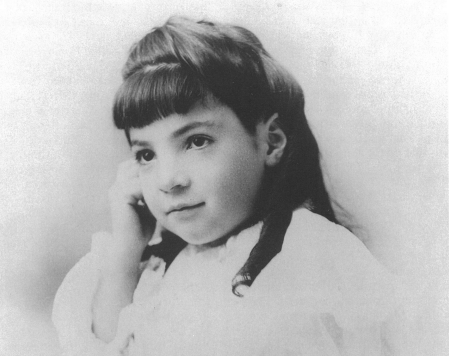
Born in Des Moines, Iowa, in 1888, Libby was the third of four children to Joseph and Sabine Hyman, Eastern European immigrants. Her upbringing was strict and austere. Her father, 12 years older than her mother, was a preoccupied businessman who had little time for his children.
Even as a young child, Libbie was fascinated by nature. She learned the scientific names of flowers from her brother’s school botany textbook and spent hours collecting butterflies and moths. At school, Hyman was the youngest in her class but excelled academically, graduating with honors in 1905. Unsure of her future, she took a job at an oatmeal factory, pasting labels on boxes.
A chance encounter with one of her high school teachers at the factory changed everything. Seeing her former star student working there, the teacher helped Hyman gain admission to the University of Chicago. Hyman studied botany and zoology, earning her bachelor’s degree in 1910. Professor Charles Child encouraged her to pursue graduate studies, and as his assistant, she supervised lab work for introductory zoology and comparative vertebrate anatomy courses.
Despite being financially independent, Hyman couldn’t escape family responsibilities. She was obligated to help her mother and brothers financially. After her father’s death in 1907, her mother and brothers moved to Chicago. Hyman found herself managing the household and enduring their criticism of her career choice.
Career Development: Lab Work and Writing Textbooks
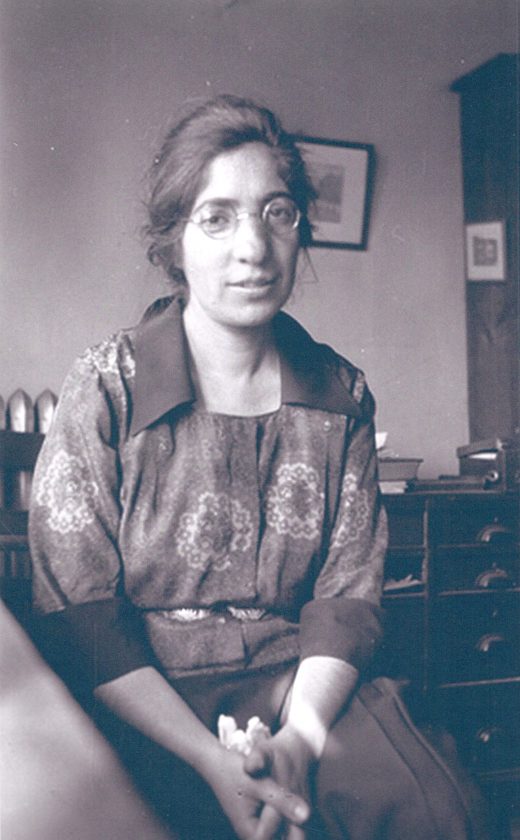
In 1915, Hyman earned her Ph.D. at age 26 with a dissertation on “An Analysis of the Process of Regeneration in Certain Microdrilous Oligochaetes.” She then accepted Child’s offer to work as his research assistant, a position she held until he retired. Her work involved physiological experiments on lower invertebrates, including hydras and flatworms. During this time, she realized that many common animals had been misidentified due to insufficient taxonomic study. She became a brilliant taxonomist of these invertebrate groups, and her interest in these creatures had a strong aesthetic component.
While assisting Child and teaching, Hyman recognized the need for a better textbook for her students. This led to the publication of her first manual, “Laboratory Manual for Elementary Zoology,” by the University of Chicago Press in 1919. The book was a huge success, and a second manual, “Laboratory Manual for Comparative Vertebrate Anatomy,” followed in 1942.
A Major Shift
By 1930, Libbie was able to live off the royalties from her lab manuals and left the zoology department. The following year, she left Chicago and embarked on a 15-month tour of Western Europe. It is worth noting that Hyman had a deep admiration for the delicate flowers, intricate forms, and symmetry of various microscopic species like protozoa, sponges, and coelenterates.
Upon her return, Hyman settled in New York and lived a very modest life, dedicating all her time to writing her comprehensive treatise on invertebrates. In 1937, she was named an honorary research associate at the American Museum of Natural History.
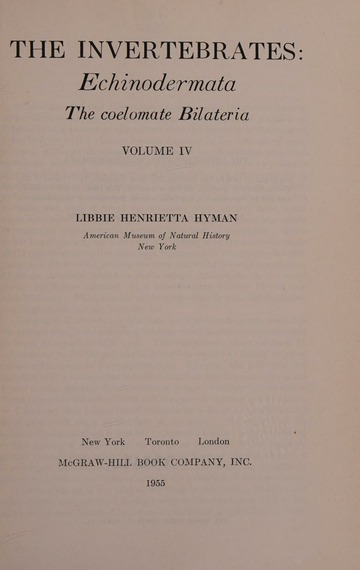
Hyman had always dreamed of living in the countryside and gardening. In 1941, she bought a house in Millwood, New York. She commuted to the museum until 1952, when she moved back to New York City. Although gardening and her commute were time-consuming, she managed to complete the second and third volumes of her treatise while living in the country. They were published in 1951. At the museum, Hyman spent countless hours in the library, reading, taking notes, and typing drafts on a mechanical typewriter. The fourth volume was published in 1955, and the fifth in 1959.
Hyman was also a huge music lover. She regularly attended performances at the Metropolitan Opera and the New York Philharmonic. She maintained active correspondence with scientists who sent her specimens or consulted with her, and she made summer trips to marine labs to collect samples.
Recognition and Later Years
Hyman’s true recognition began with the publication of her first invertebrate book. In 1941, the University of Chicago awarded her an honorary Doctor of Science degree. In 1951, she received the Daniel Giraud Elliot Medal from the National Academy of Sciences. In 1959, Hyman became the president of the Society of Systematic Zoology and edited the journal Systematic Zoology from 1959 to 1963. In addition to her books, Hyman published 135 scientific papers between 1916 and 1966.
In the last decade of her life, Hyman’s health began to decline, and working from her wheelchair became increasingly difficult. In 1967, at the age of 78, while suffering from Parkinson’s disease, she published the sixth volume of her monumental work. In the preface, Libbie announced that it would be her last volume. This extraordinary woman passed away on August 3, 1969.
Libbie Hyman made an immense contribution to the field of zoology. Her works are still widely cited and used today, considered an excellent source of knowledge.