

From the moment Chicago was founded, industry began to develop rapidly in the city. After the land was settled and residents adapted to the environment, Chicago entered a strong phase of economic growth around 1850. While the city’s economic indicators were less striking after 1930, it managed to remain one of the most important business and economic centers in the U.S., reports chicagoname.com.
Trade on the Great Lakes
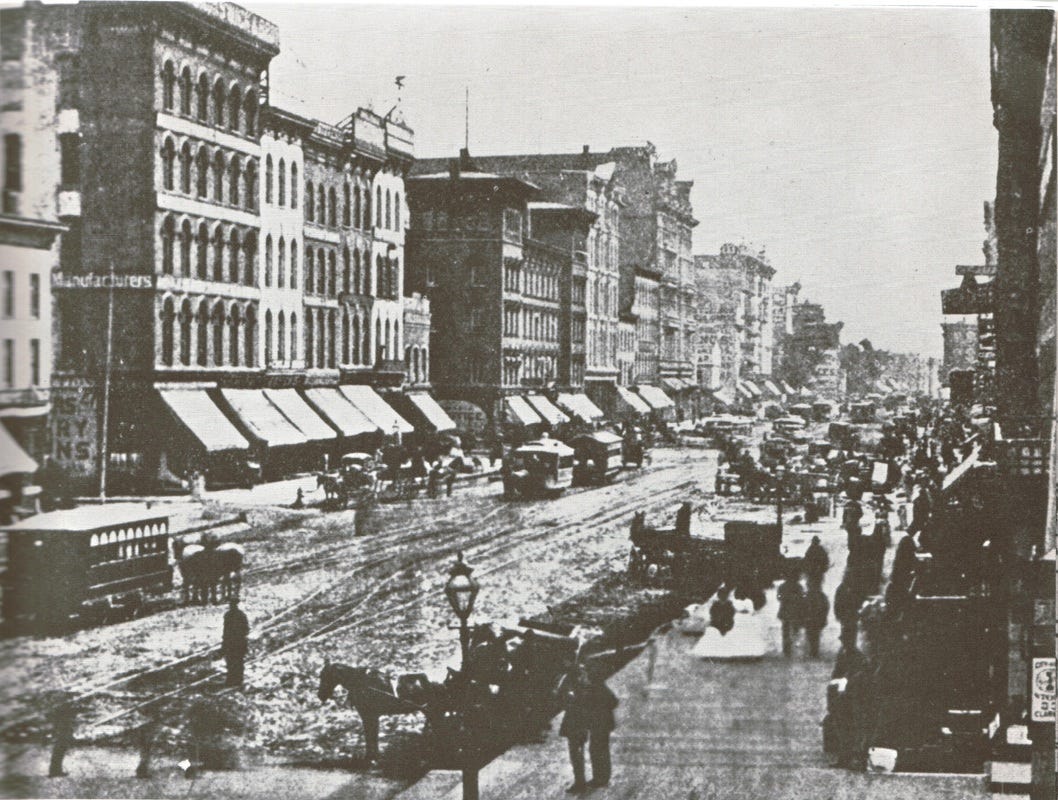
European settlement of the Great Lakes region began relatively early, during the so-called Age of Discovery. By the end of the 17th century, French explorers Louis Jolliet and Jacques Marquette had charted the territory along the southwestern coast of Lake Michigan. Throughout the 18th century, the area’s marshlands also attracted traders and European travelers. The intensity of European and African commercial settlement increased noticeably in the early 19th century. Today, most who study the economic development of the southern Great Lakes region, including Chicago and its surroundings, view it within the context of the expanding capitalist market of the Western world. The fur trade, military installations, government infrastructure investments, and the sale of farm products all led to the region’s gradual integration into commodity markets.
In the early 19th century, expanding capitalism economically transformed this region, shifting it from a place of irregular cross-cultural trade in resources and valuables to a site of regular production and exchange of agricultural and industrial goods. The completion of the Erie Canal in 1825 was a pivotal event. This waterway connected the Great Lakes to Buffalo, Albany, and New York City. The canal helped shift the center of economic power in the Northwest from the Ohio Valley—from Cincinnati and Louisville—to the southern shores of the Great Lakes, to Cleveland, and increasingly, to Chicago. Visionary entrepreneurs soon began investing in the future of the cities along the southern Great Lakes.
Rich Natural Resources
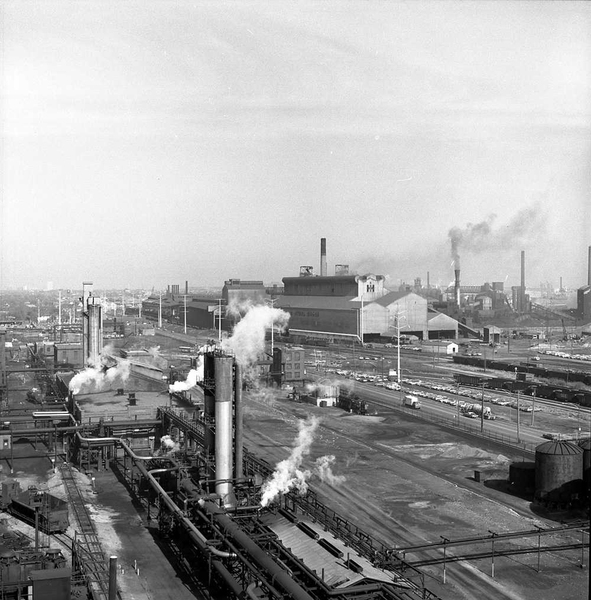
The Midwest possessed abundant resources that fueled the region’s economic development. For instance, it had soil of immense natural fertility and a virtually inexhaustible supply of water. It also held vast deposits of iron ore and coal, which proved essential as America transitioned to steel and steam power. These natural resources were complemented by a large reserve of social and cultural resources. The settlements were dominated by farmers and artisans accustomed to disciplined labor, rational calculation, and prudent saving. They were followed by immigrants from other countries who, despite significant cultural and traditional differences, adapted to the economic and social expectations of their Euro-American neighbors.
While the best opportunities at the beginning of the century involved sourcing raw materials, cross-cultural trade, land speculation, and settlement, commercial agriculture soon took hold. The cultivation of grain, cattle, corn, and hogs improved trade and gave birth to what is now known as Chicago’s agro-industrial complex. In 1848, the Illinois & Michigan Canal was completed. It connected Chicago to the Mississippi River system via the Illinois and Chicago rivers. This transformed the city on the southwestern shore of Lake Michigan into one of the most critical urban hubs of the Midwestern economy.
Between 1850 and the 1920s, Chicago transformed from a small regional trading post in the U.S. interior into the nation’s second-largest city. In 1850, it was served by the Galena and Chicago Union Railroad; just six years later, it had become the largest railroad center in the world. Moreover, despite having only rudimentary manufacturing capabilities at mid-century, Chicago became the core of one of the most developed industrial regions on Earth by 1900. From a small center for trade, distribution, and supply for Great Lakes farmers in 1850, Chicago expanded its hinterlands to the Rocky Mountains within a few decades, growing into a global empire.
By 1890, Chicago was the epicenter of livestock slaughtering, lumber production, and furniture manufacturing in the U.S. At that time, the city was also the nation’s leading producer of clothing, tobacco products, iron, and steel.
The City’s Industry in the 20th Century
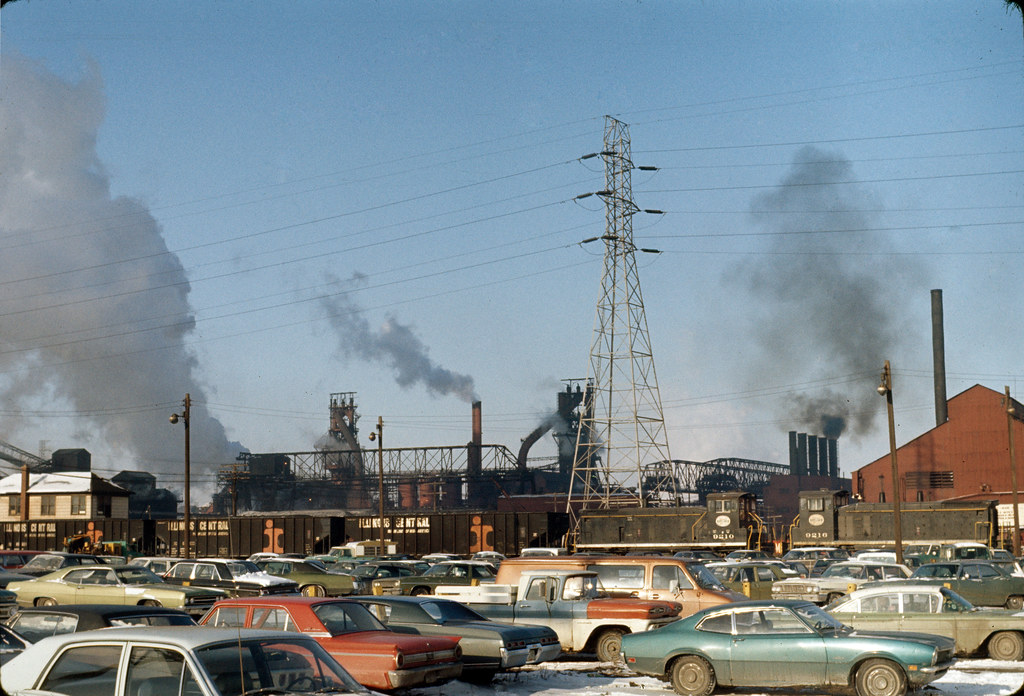
Chicago’s industry continued to grow until 1930. Furthermore, many early manufacturing sectors—such as lumber sawing and planing, milling, and meatpacking—gave way to more advanced industries based on the production of metals, iron, and steel.
In 1930, the three largest components of Chicago’s manufacturing industry were electrical machinery, iron and steel production, and machine shop and foundry production. For example, in 1929, the apparel industry employed over 30,000 city residents, printing and publishing employed over 25,000, and the furniture industry employed 18,000. Most American products were made by small and medium-sized family firms producing small batches of specialized goods. In Chicago, these businesses were typically located on the city’s West and North Sides, while large factories dominated the South and Southeast Sides.
As the city’s manufacturing industry developed, so did its sales markets. By the late 1920s, electrical machinery, iron and steel products, machine tools, and metals produced in Chicago were sold not only in the U.S. but around the world.
The city’s significant industrial might explains its economic dynamism. Comparing Chicago’s economic structure after the 1930s to that of the 1850s, it’s striking how limited and constrained the earlier period was. The city’s industrial development was largely an expression, if not the embodiment, of the Midwest and its diverse resources:
- Fertile prairies in the age of agricultural and railroad development.
- Coal and iron ore in the age of steel.
- Food, fibers, and raw materials during a period of population growth and urbanization.
Of course, U.S. industry and economy continued to develop after the 1930s, but not with the same intensity as before. The modern city has managed to maintain its strong, high-tech industrial profile and remains a center for wholesale and retail trade, distribution, and industrial and commercial exhibitions.
Maintaining Leadership
Between the 1920s and 1970s, Chicago retained most of its traditional industries. In 1954, the city even surpassed Pittsburgh, the former leader, in iron and steel production, accounting for a quarter of the entire country’s output. Production volumes in mechanical engineering, metallurgy, printing, chemicals, and food processing were also high. The consumer electronics industry expanded significantly as firms like Motorola, Zenith, and Admiral captured large market shares. However, while the area’s industrial economy remained strong, the city’s did not. Companies began closing old factories in the city and reopening in the suburbs.
In 1970, the nature of Chicago’s metropolitan economy changed. With the opening of the St. Lawrence Seaway, there were plans to develop maritime trade. However, this failed, as competition from foreign firms suppressed many local companies.
Chicago endured the Depression, wars, a post-war boom, and the downsizing and restructuring of the 1970s and 1980s, all while retaining a significant portion of its pride and prosperity.