

Chicago’s transit system is a unique phenomenon, not just in the U.S. but worldwide. It is home to the iconic network of elevated trains known as the “L.” Despite having underground sections, Chicago remains the only major American city where rapid transit runs directly above the bustling streets of the central business district. The history of the L is a saga of engineering ambition, urban challenges, political maneuvering, and a city’s constant evolution to meet the needs of millions. Read more at chicagoname.
Building Chicago’s Transit Foundation
In the late 19th century, Chicago was booming, rapidly transforming into one of America’s premier industrial and transportation hubs. Starting in the 1870s, private companies began laying tracks within city limits, while public transportation relied on horse-drawn streetcars. By the 1880s, cable cars took over as a major technological leap, but they quickly hit their limits. Explosive population growth and gridlocked streets forced city leaders to find a way out of the chaos. Surface transit could no longer handle the passenger volume, only adding to the congestion. With the population soaring, a radical new solution was needed.
The Birth of the First L Line
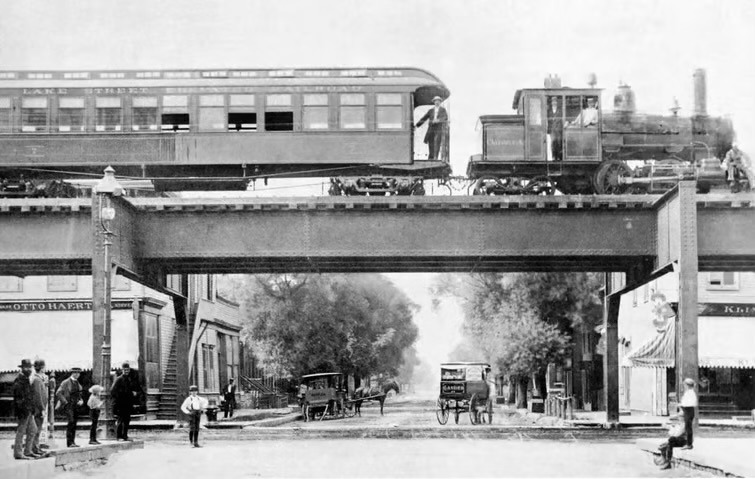
June 6, 1892, marked a historic milestone for Chicago: the first elevated train began service between 39th Street (now Pershing Road), temporary terminal on Congress Street, running through the alley between intersection of State Street and Wabash Avenue. By 1893, the line was extended to Jackson Park to serve the crowds attending the World’s Columbian Exposition.
Throughout the 1890s, several private railroad companies operated across the city. They ferried passengers to the edge of the central business district, which eventually became known as “The Loop” due to the circular path of the early streetcar routes.
The real turning point came through the efforts of financier Charles Tyson Yerkes. Despite his controversial reputation and cutthroat business tactics, Yerkes was the architect of the modern Chicago transit system. It was Yerkes who pushed for the construction of elevated tracks directly over the downtown streets. In 1897, the first complete elevated “Loop” was finished. The massive steel structure was designed by engineer John Alexander Low Waddell, featuring an aesthetic that echoed the industrial grandeur of the Eiffel Tower and the original Ferris Wheel—both icons of the same era.
Going Underground
Until the 1940s, all of Chicago’s rapid transit lines were either elevated or at street level. This changed during President Franklin D. Roosevelt’s New Deal era. Funded by the Public Works Administration, the State Street Subway opened in 1943, forming what is now the heart of the Red Line.
In 1951, following delays caused by World War II, the Dearborn Street Subway began operations. While Chicago finally had two major underground routes, the elevated tracks remained the backbone of the L system.
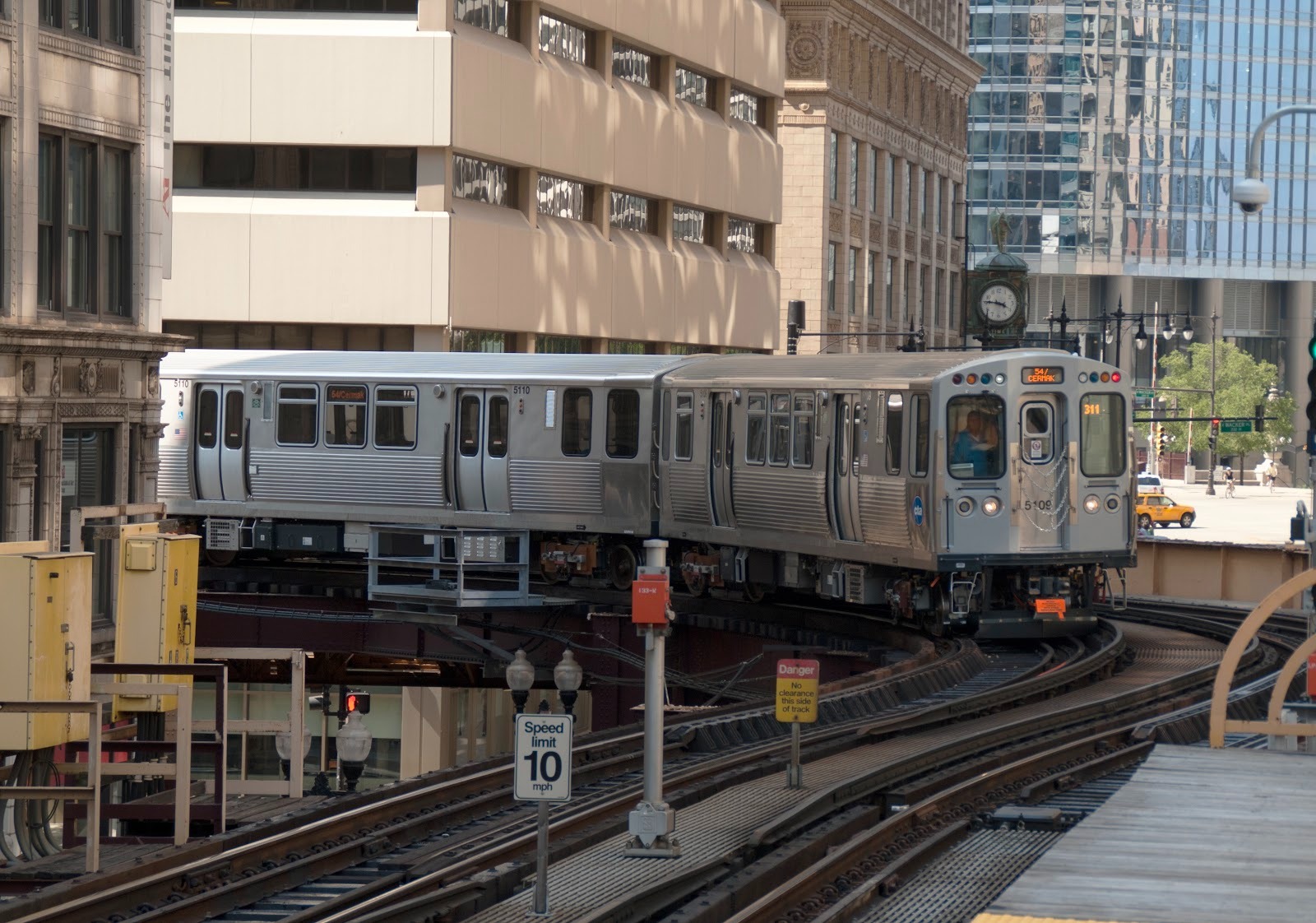
The system continued to expand in the following decades, reaching O’Hare International Airport in 1984 and Midway Airport in 1993. That same year, the lines were officially designated by colors, a move that significantly simplified navigation for locals and tourists alike.
Since 2005, the L has seen steady ridership growth, hitting several all-time records. The CTA continues to invest heavily in infrastructure, station modernizations, and new rail cars.
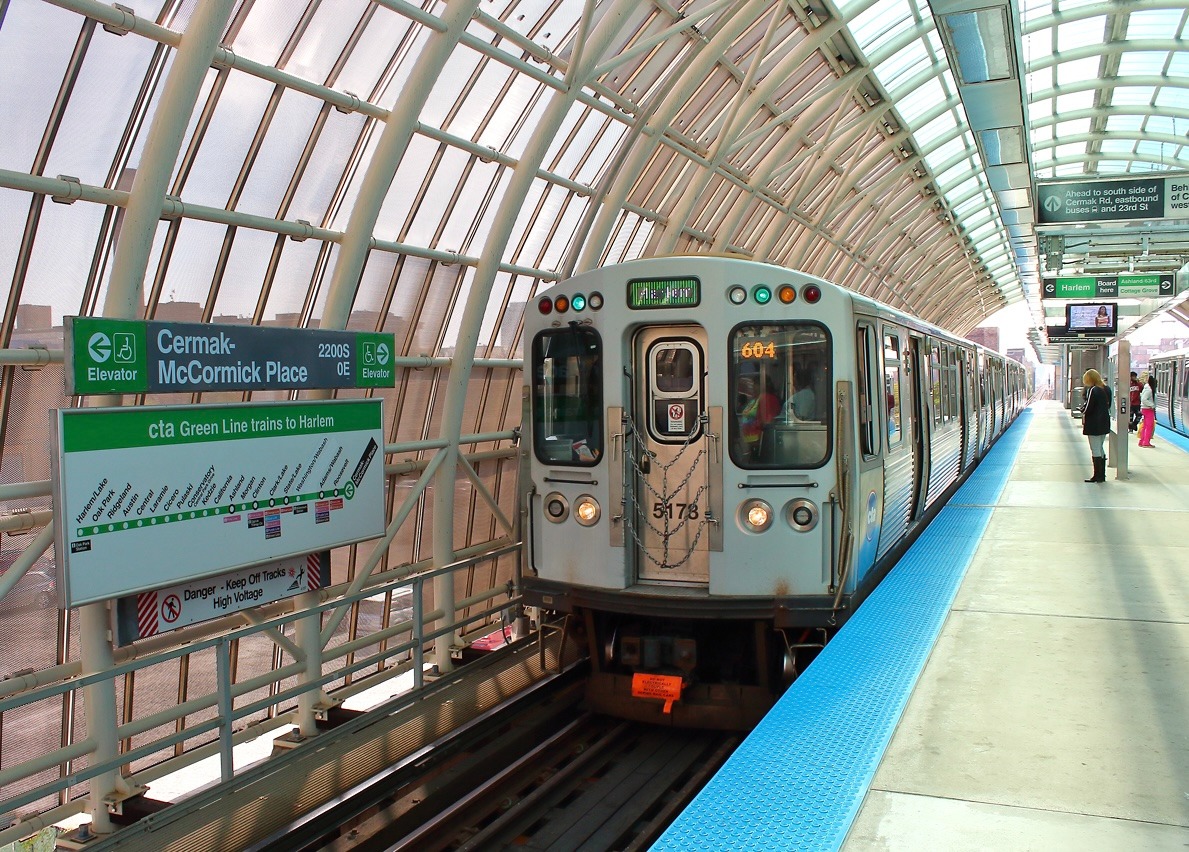
The Pink Line opened in 2006, connecting the Loop to suburban Cicero. In 2012 and 2015, new Green Line stations were added to serve the booming West Loop and the McCormick Place convention center. In 2017, the sleek, modern Washington/Wabash station opened in the heart of the Loop as a new gateway to the city.
The Environmental Impact
Chicago’s public transit system, led by the “L” network, does more than just move people—it is vital to the city’s sustainability and air quality efforts.
One of the primary environmental benefits of the system is the massive reduction in car traffic, which directly lowers harmful emissions. Studies suggest that full-scale investment in Chicago’s public transit could reduce greenhouse gas emissions by roughly 11% by cutting down on solo car trips. Furthermore, regional vehicle miles traveled (VMT) are projected to drop by 15%, a shift that directly cleans the city’s air.
The CTA emphasizes that rail and bus travel significantly offsets regional automotive emissions. By replacing private car use—the leading source of urban air pollution—the L serves as a green engine for the metro area.
Research confirms that these transit investments pay off in public health. Lower levels of fine particulate matter translate to a reduced risk of respiratory and cardiovascular diseases for Chicagoans, making the L a win for both the economy and the environment.