

Many people know that the city of Chicago is on the shores of the picturesque Lake Michigan in a low-lying, flood-prone marshland. In the 19th century, the height of the shore here was only 61 cm from the water surface. Due to the fact that there were no necessary conditions for natural soil drainage and rainwater runoff, the sanitary situation was very poor.
The precipitation was a real challenge for the townspeople, as the streets turned into an impassable swamp. There was so much mud that horses could barely move around the city, chicagoname.com reports.
Arrangement of sewage system
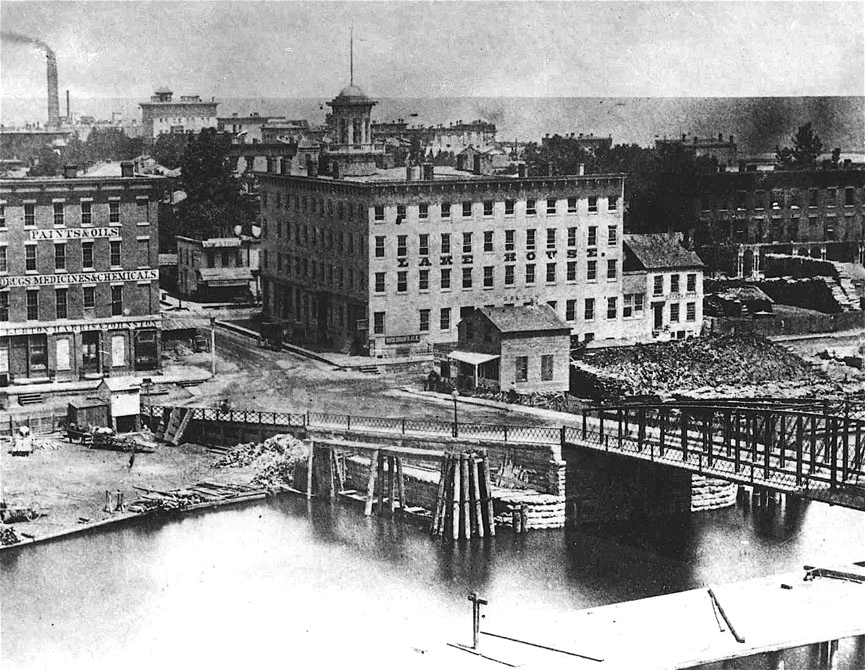
In the mid-19th century, Chicago was considered the dirtiest city in the United States. This status was due to the activities of factories and distilleries that had a negative impact on the environment. In addition, the situation was aggravated by the people themselves, who threw garbage into the streets without any remorse. This led to water pollution. There was an unbearable smell in the city and virtually no air to breathe. This behavior led to serious outbreaks of epidemics that claimed thousands of lives.
The situation was getting worse. The authorities finally thought about developing and building a good sewage system. Discussions on this issue took a long time, but in 1856, work began. At that time, the Chicago City Council reviewed and approved a plan for the city’s sewer system presented by engineer Ellis Chesbrough.
The work began with laying pipes. This was done through the entire city right along the streets. The reason was that it was unrealistic to build underground because of the city’s low-lying location. Huge clay pipes were covered with a thick layer of earth. Then roads and sidewalks were laid again. Clay pipes were strong and durable. Moreover, they did not corrode or rust like metal, so they were well suited for underground work. Their price was high, but the authorities decided to spare no expense (they were going to do it once and right).
Elevation of residential buildings
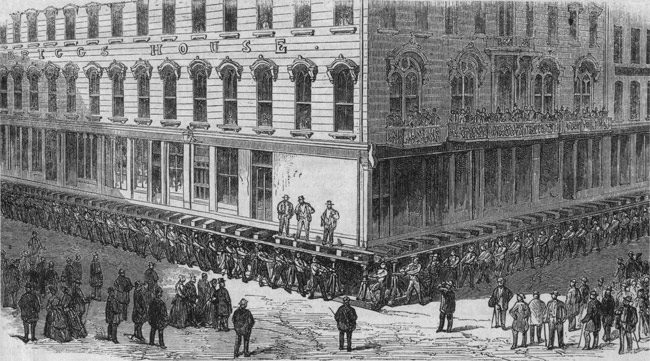
Imagine, to ensure the gravity-flow mode of the drainage system with discharge into the river, it was necessary to lift all the buildings with jacks. In some parts of the city, the street level was raised by 2.4 meters. Naturally, such work cost a lot of money.
It is important to note that around 1860, the first centrifugal pumps (first steam and then electric) began to appear. However, such innovations were not yet seriously considered as an option for pumping wastewater, so there was no alternative to expensive lifting.
In 1858, the first brick building was lifted with 200 screw jacks. The work was done so perfectly that the building was not damaged at all. The process was led by Boston engineer James Brown. After the building was raised and leveled, the foundation was laid under it.
In 1860, a company of 6 engineers was able to raise half a block of Lake Street, a series of offices and shops with a total length of 98 meters. During these works, people continued to live, they came inside the buildings, made purchases, as if nothing unusual was happening. The Lake Street elevation lasted 5 days. It involved 600 people and the same number of screw jacks. Thus, they managed to raise the block by 1.42 meters. In 1861, engineers raised the 6-storey Tremont House Hotel, with an area of 4,000 meters. Once again, everything went off without a hitch, and the hotel continued to operate even when it was off the ground. Moreover, the guests had no idea that 500 people were working in the pit, which was closed from the street.
Moving buildings
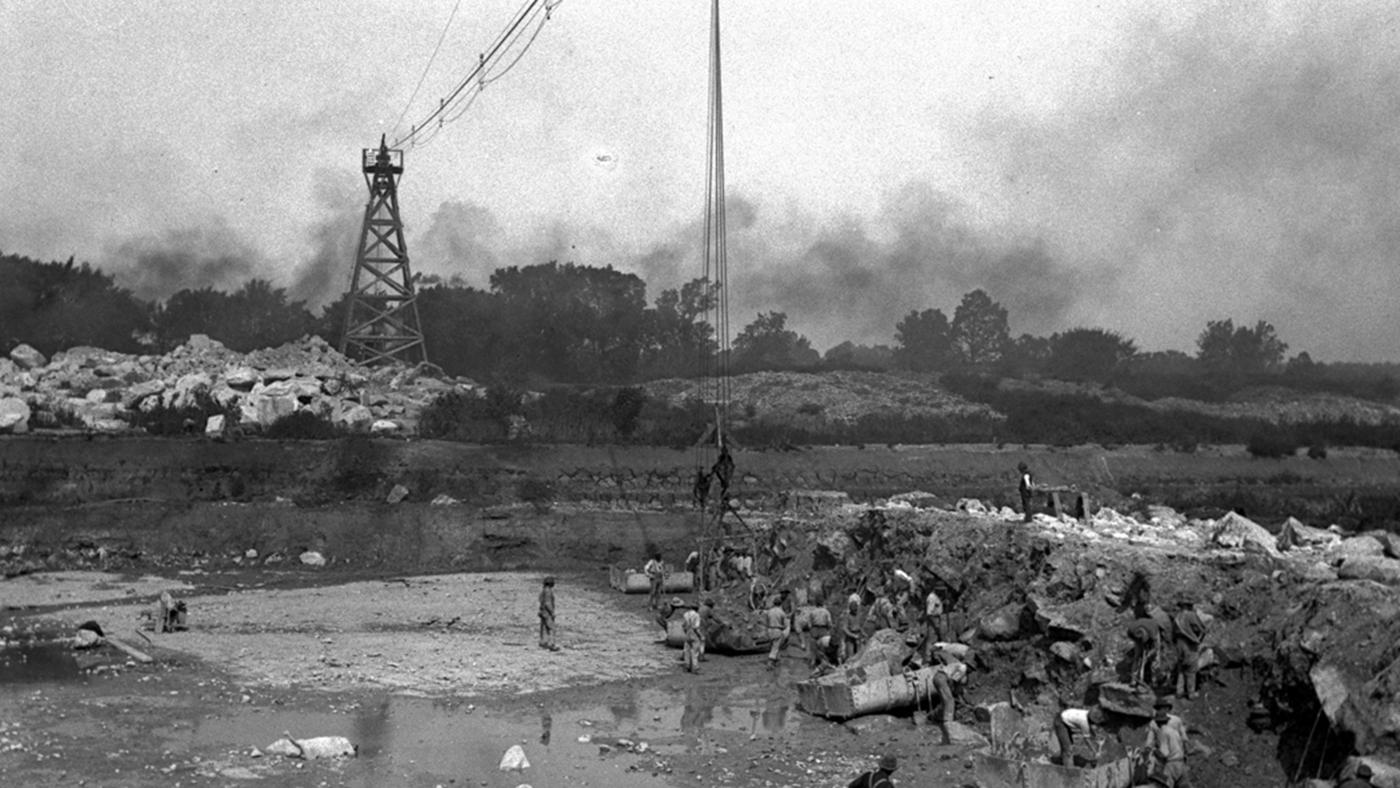
By the mid-19th century, many of the wooden and frame buildings in downtown Chicago were considered inappropriate for a growing city. Therefore, they were moved to another location, thus freeing up land for the construction of new stone buildings. Just imagine, the house was transported with all the furniture and belongings. Soon, this practice became so common in the city that people perceived it as a regular cargo transportation.
The created sewer system helped redirect wastewater from residential areas to the Chicago River. This unique development was groundbreaking at the time and had a significant impact on urban planning and infrastructure design. Its unique design was an important milestone in the field of civil engineering, pushing the boundaries of what was considered achievable in construction and urban planning.
Engineers had to develop new methods and strategies, many of which had an indelible impact on civil engineering practice. The successful construction of the Chicago Sewerage System not only solved a major public health problem, but also marked a turning point in architectural and engineering innovation. The story of the Chicago sewer is a vivid example of how engineering ingenuity overcomes environmental problems.
It serves as a reminder of the transformative potential of engineering in urban planning and the importance of innovative thinking in solving complex problems. Chicago’s rise from the mud is not just a chapter in the city’s history, but a vivid testament to the spirit of innovation that defines the field of structural engineering.