Karl Sauer, a globally renowned geographer of the 20th century, had a profound impact on American geographical thought. His unique work helped elevate geography to the respected academic discipline it is today, solidifying its place as a fundamental research field in American universities, according to chicagoname.com.
Early Life and Education
Born on December 24, 1889, in Warrenton, Missouri, Karl was the son of scholars William and Rosetta. At the age of nine, he was sent to Germany for three years to receive his primary education. This experience exposed him to European ideas and philosophies, particularly the German classics, which focused on the intersection of history and nature. As a teenager, he returned to the US to attend Central Wesleyan College, graduating in 1908. Sauer later enrolled at Northwestern University before transferring to the University of Chicago, where his passion for geography deepened under the tutelage of renowned geologist Rollin Salisbury. In 1915, Karl earned his Ph.D. in geography from the University of Chicago, specializing in the geography of the Ozark Mountains.
A Challenge to Environmental Determinism
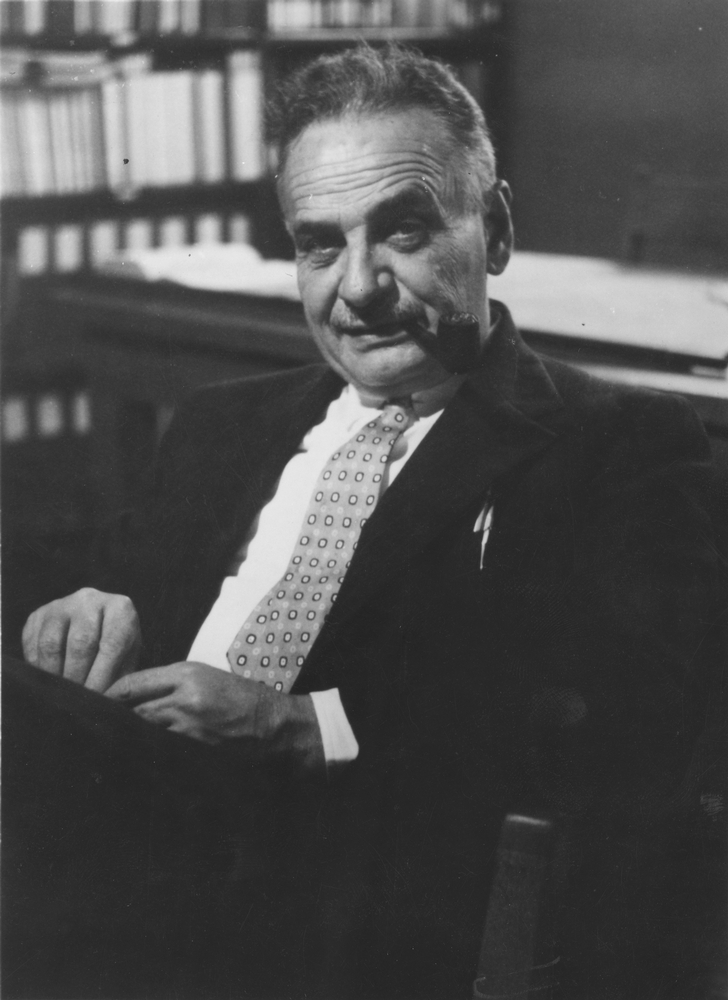
After graduating, Karl began teaching geography at the University of Michigan, where he remained until 1923. In the early part of his career, he studied and taught environmental determinism, a theory that claimed the physical environment—climate, landscape, and resources—shaped societies and their development. This was a prevalent concept in geography at the time, and Sauer explored it in depth.
However, after studying the clear-cutting of pine forests in Michigan’s Lower Peninsula, Karl’s views on environmental determinism began to shift. He concluded that it was humans who controlled nature and developed their own cultures. He became an outspoken critic of environmental determinism and carried this perspective throughout his career.
During his graduate studies in geology and geography, Sauer realized the importance of fieldwork. He made it a cornerstone of his teaching at the University of Michigan, engaging in field mapping of physical landscapes and land use. Sauer also published numerous works on the region’s soils, vegetation, and land quality.
Founding the Berkeley School and Latin American Research
In the early 1900s, geographical studies in the US were mostly concentrated on the East Coast and in the Midwest. In 1923, Karl left the University of Michigan for the University of California, Berkeley. There, he became the head of the department and further developed his ideas about what geography should be. This is where he became famous for establishing the Berkeley School, a school of geographical thought that centered on regional geography, organized around culture, landscapes, and history.
This area of study was crucial for Sauer as it reinforced his opposition to environmental determinism. It emphasized how people interact with and transform their physical environment. Karl also stressed the importance of history in geographical studies, bringing together Berkeley’s geography department with its history and anthropology departments.
In addition to the Berkeley School, one of Sauer’s most famous works was his 1925 article “Morphology of Landscape.” Like many of his writings, it challenged environmental determinism and clearly articulated his belief that geography should be the study of how modern landscapes are shaped over time by human and natural processes.
In the 1920s, Sauer began to apply his concepts in Mexico, which sparked his lifelong interest in Latin America. He also published the Ibero-Americana with other scholars. For most of his life, Sauer studied this region and its cultures, writing numerous works about the indigenous peoples of Latin America, their culture, and their history.
In the 1930s, Sauer served on the National Land Use Committee and, with one of his graduate students, Charles Thornthwaite, began to study the relationship between climate, soil, and slope to identify soil erosion. Karl soon became critical of the government and its failure to create sustainable agriculture and economic reforms. In 1938, he wrote a series of essays addressing environmental and economic issues. During this period, Karl also developed an interest in biogeography, writing articles on the domestication of plants and animals.
In 1955, Sauer organized the international conference “Man’s Role in Changing the Face of the Earth” in Princeton, New Jersey, and contributed to a book of the same name. In it, he explained humanity’s impact on the landscape, organisms, water, and atmosphere. The gathering of scholars helped lay the intellectual foundation for the environmental movement that took off in the 1970s. In 1957, Sauer retired from his academic position but continued to write and conduct research. During this time, he wrote four novels about early European contact with North America.
Sauer always supported the German community in Warrenton. The settlers were Westphalian immigrants who fled a repressive Germany in the 1840s in search of freedom and free thought. These enthusiasts for education created a close-knit community and supported a college founded on German ideas and values.
Throughout his career, a central theme for Karl Sauer was the transformation of the natural landscape into a cultural one. He studied people in their cultural context as agents of change in nature, in a field known as human ecology. He was particularly troubled by how human land use degraded the environment. He often wrote about destructive land use and a predatory land economy, arguing that humanity continues to exist by spending its natural capital. Later, the term “sustainability” was coined to describe a harmonious relationship between people and the planet they inhabit. Because of these statements, environmentalists came to see Sauer as a prophet who had been writing on this topic since the 1920s, long before it was well-researched and formulated.
Karl constantly insisted that geographers should learn through fieldwork and observation, following the Goethean tradition of personal experience in nature. His own field research focused on the American Southwest and Mexico. Sauer valued the wisdom of rural people, their understanding of the environment and natural processes. He often said he felt most comfortable among them.
A Lasting Legacy
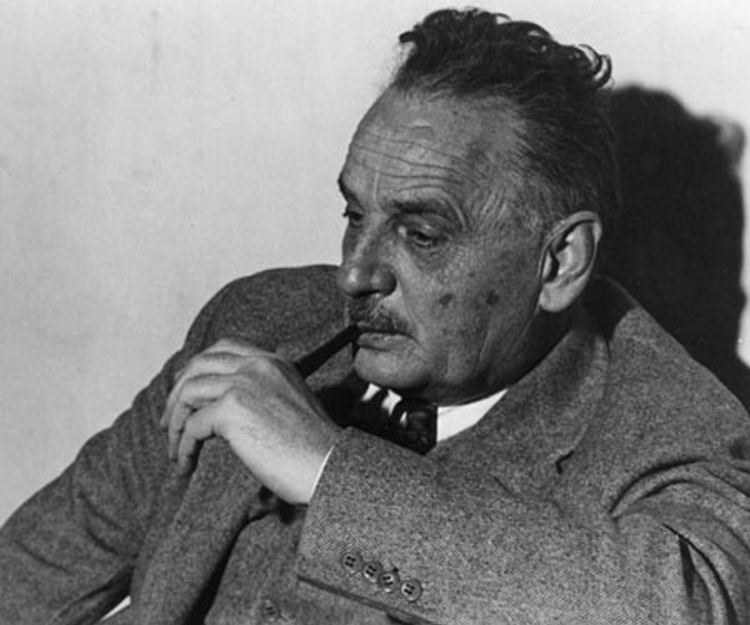
Karl Sauer’s contributions to geography are immense. His rejection of environmental determinism, a popular theory in the early 20th century, paved the way for a better understanding of the human-environment relationship. Sauer argued that while the physical environment is the backdrop, societies actively transform it through agriculture, urban development, and other activities. This approach revolutionized geography and led to the development of the sub-discipline known as human ecology.
Karl did much to bring attention to issues of sustainability and conservation, exploring land use, agriculture, and the domestication of plants and animals in the Americas. His work remains relevant in modern geography, ecology, and anthropology. He inspired generations of scholars to take an interdisciplinary approach and to assert that history is intrinsically linked to landscapes. Today, his writings form the foundation for many current discussions on sustainability, conservation, and humanity’s relationship with the world.
Karl Sauer passed away on July 18, 1975.