This park has endured the city’s founding, a World’s Fair, fires, social protests, and the construction of the Barack Obama Presidential Center. Its history is a reflection of the United States itself: ambition, creativity, tragedy, and a constant drive for renewal. Read more on chicagoname.
The Park’s Founding
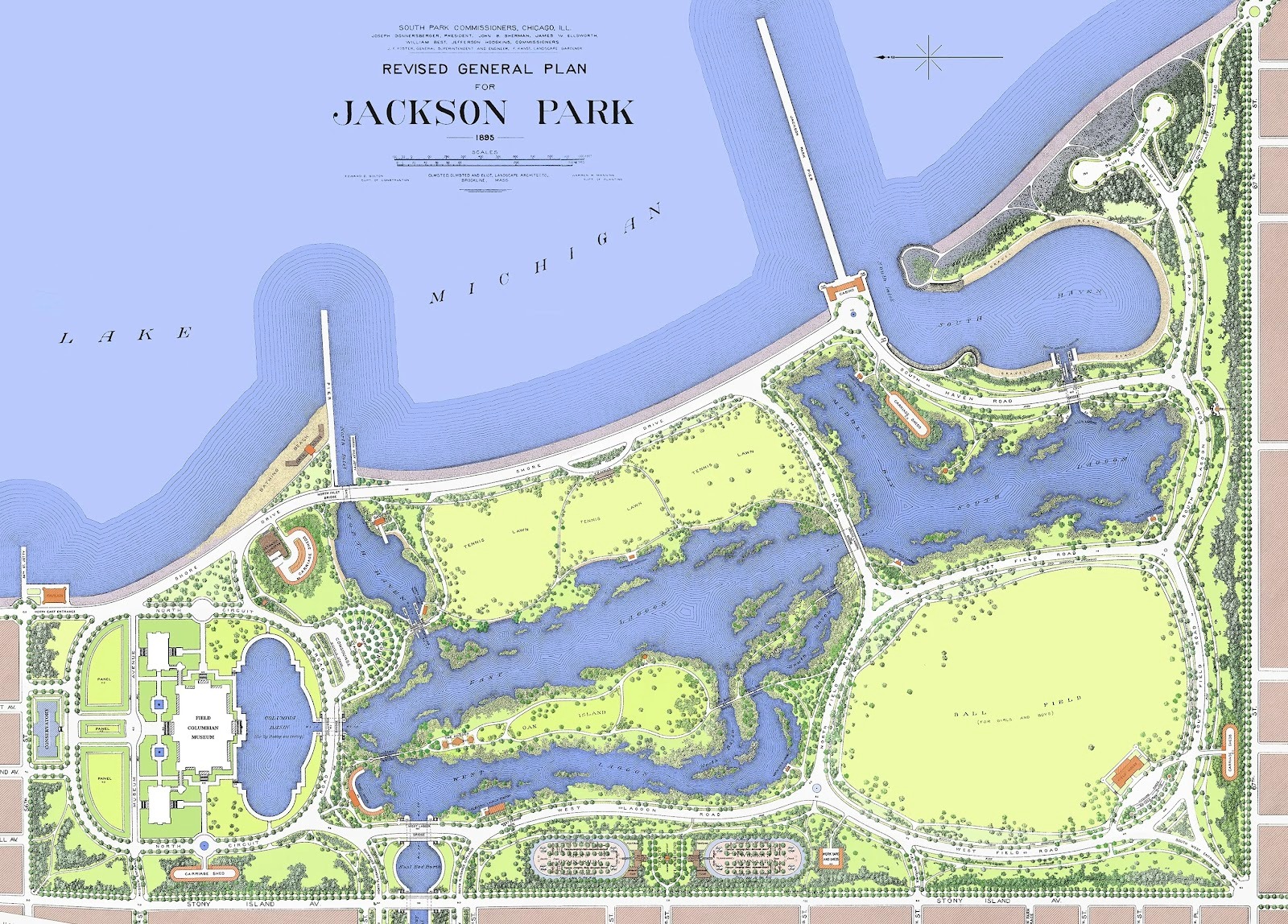
After the Civil War, in the 1860s, Illinois lawmakers passed legislation to create a system of parks and boulevards intended to transform Chicago into America’s “green capital.” Three separate commissions were established for this purpose, with the southern part of the city—the future Jackson Park—set to be the crown jewel. This is when Frederick Law Olmsted, the renowned American landscape architect already famous for creating New York’s Central Park, joined the project. Olmsted always had a talent for seeing beauty where others saw only land. In his designs, nature was never a backdrop; it was the main character. He was immediately drawn to the location by Lake Michigan. Water was to be the unifying theme for Chicago’s entire park system. Olmsted believed the view of the lake was the most powerful natural element, one that needed no artificial enhancement.
His vision was grandiose: over 390 acres of parkland by the lake, another 370 acres further inland (now Washington Park), and a wide greenway—the Midway Plaisance—to connect them into a single ecosystem. The architects envisioned the 1,055-acre park as a harmonious aquatic landscape with a yacht harbor, winding paths, bathing pavilions, and numerous lagoons. However, the Great Chicago Fire of 1871 brought these plans to a halt, forcing the city to postpone all “non-essential” projects. It was only 20 years later that the project was revisited. By this time, Olmsted was a seasoned master, simultaneously working on another major project—the Biltmore Estate in North Carolina. Despite his age and fatigue, he returned to Chicago to finish the job he had started.
Initially, the area was named South Park, with its eastern section called Lake Park. However, in 1881, the public chose a new name: Jackson Park, in honor of the seventh U.S. President, Andrew Jackson.
The “White City”
In 1890, Chicago won the right to host the World’s Columbian Exposition, an event that would change the face of the city. Architect Daniel Burnham, along with Olmsted, transformed Jackson Park into a magnificent city of snow-white pavilions. This “White City” became a symbol of American progress and architectural ideals. Olmsted turned the swampy, windswept land into a system of lagoons and canals that integrated water with landscape architecture. Water became the central motif of the design—a symbol of life, movement, and reflection. For Olmsted, the primary goal was to evoke emotion in visitors, to make them feel the same harmony that comes from connecting with nature. He believed that beauty was not a luxury but a vital necessity capable of influencing the human soul.
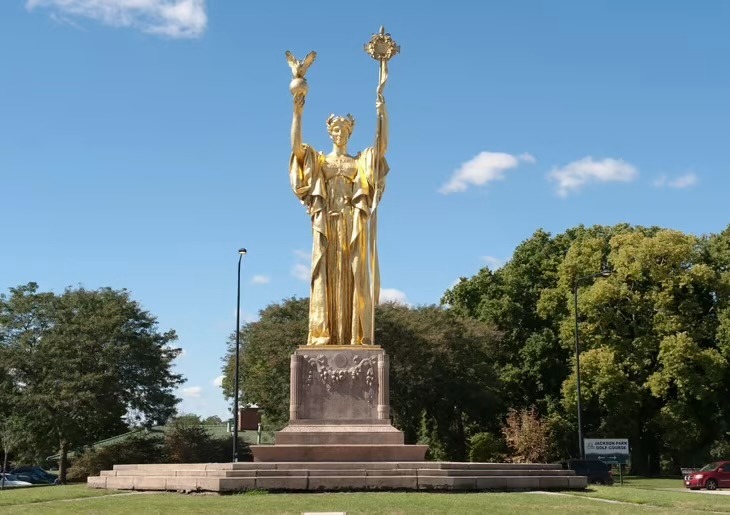
Among the park’s landmarks is the Statue of the Republic, created by Daniel Chester French. The modern version of the statue is a replica, reduced to one-third the size of the original. It stands on the former site of the exposition’s Administration Building. But the glory of the “White City” was short-lived; in 1894, most of the structures burned down. Jackson Park returned to its natural state, but the memory of the fair remained forever.
In 1899, Jackson Park became home to the first public golf course west of the Allegheny Mountains. Thanks to the efforts of Colonel Irwin, the game was made accessible to all residents, regardless of their wealth. This was an important step in democratizing recreation in Chicago. In the late 19th and early 20th centuries, the park became a hub for active leisure. The Jackson Park Yacht Club was founded in 1896 and quickly became one of the most prestigious in the region.
Revival and 20th-Century Challenges
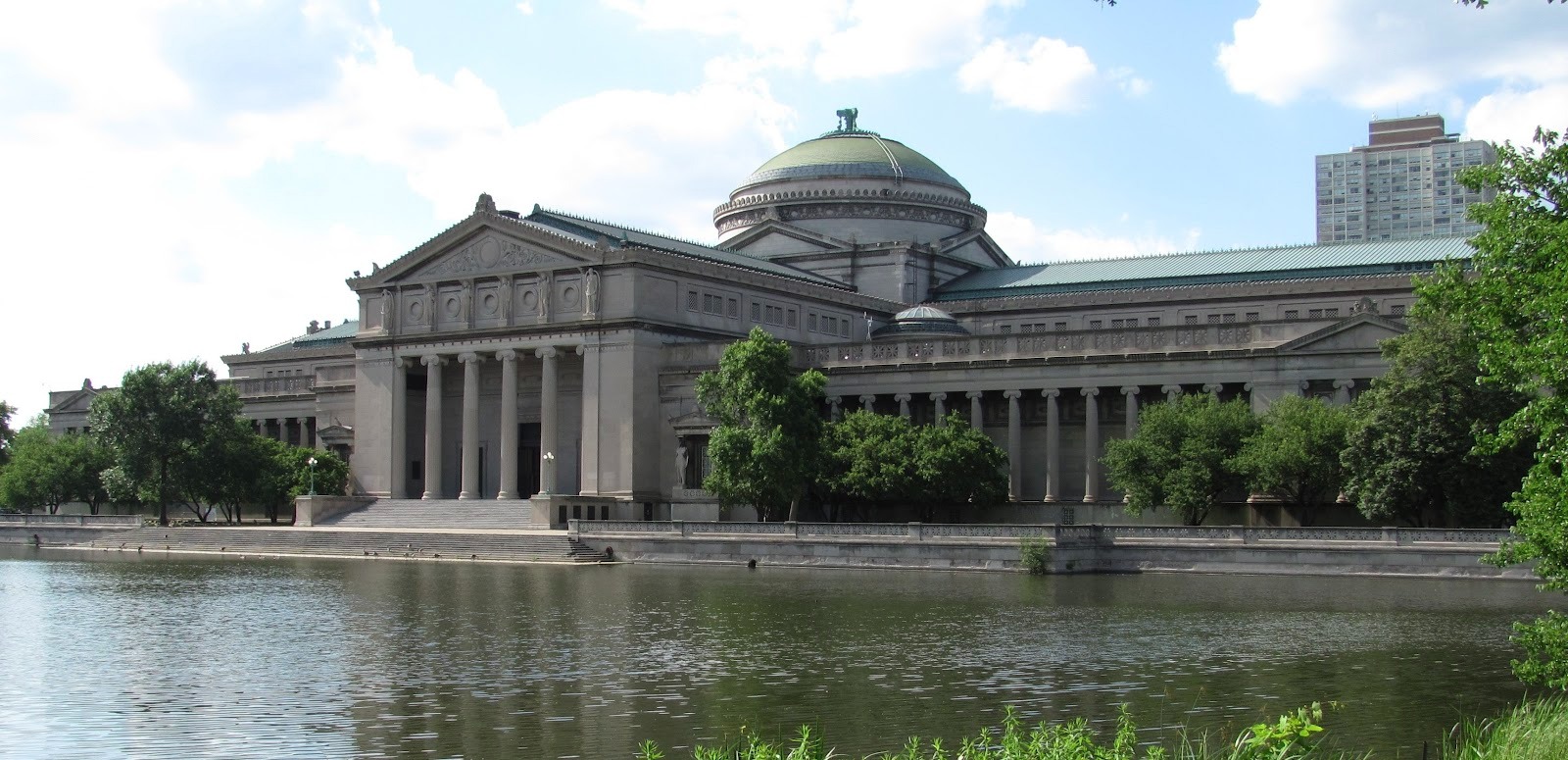
After the exposition, the only building that survived was the Palace of Fine Arts. In 1933, it was given a new life as the Museum of Science and Industry, thanks to funding from Sears President Julius Rosenwald.
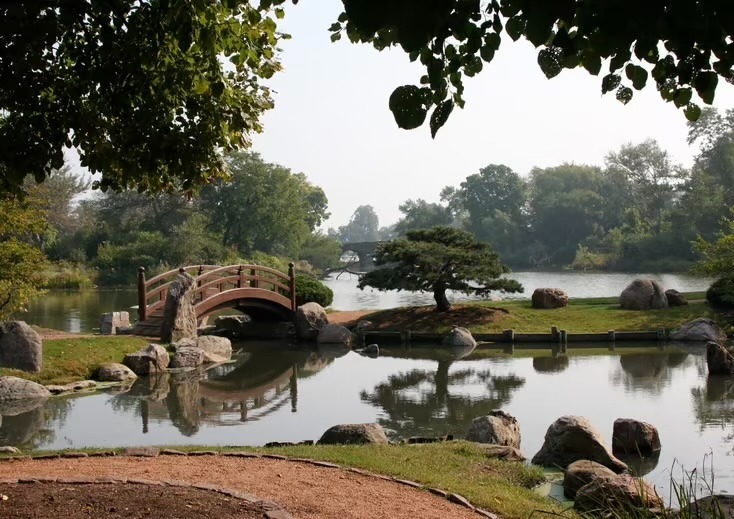
On Wooded Island (an island within the park), a Japanese garden was created, now known as the Garden of the Phoenix. The phoenix symbol is no accident—it represents Chicago’s rebirth after the Great Fire of 1871. The garden suffered damage during World War II but was later restored with donations from Chicago’s sister city, Osaka.
During the Cold War, a portion of the park was occupied by the military: a Nike missile base was located here, with a radar station nearby. However, the community repeatedly defended the park. In the 1950s, residents halted a plan to install an anti-aircraft battery on Wooded Island. In 1965, protests forced officials to abandon plans to build a freeway through the park. In 1972, Jackson Park was officially listed on the National Register of Historic Places.
Restoration and Modern Initiatives
In the early 21st century, Jackson Park underwent another wave of renewal. In 2012, the non-profit organization Project 120 began a large-scale restoration. They aimed to return the park to Olmsted’s original vision. As part of the Great Lakes Fishery & Ecosystem Restoration program, a five-year, $8 million-plus project to restore Wooded Island was launched.
In 2016, Japanese artist Yoko Ono unveiled her first permanent installation in the United States, titled Skylanding. According to the artist, the project symbolizes peace and renewal, inspired by the beauty of the Garden of the Phoenix. The sculpture is located on Wooded Island, the very spot where the Japanese Phoenix Pavilion greeted visitors to the World’s Fair over a century ago.
In 2016, former U.S. President Barack Obama announced that Jackson Park would be the site for the Obama Presidential Center. The choice was deeply symbolic: both he and Michelle Obama are natives of Chicago’s South Side. The project includes a 235-foot museum tower, a library, a children’s area, and a spacious lawn. However, the initiative sparked intense debate, with some activists fearing the loss of the park’s historic status. After four years of legal battles, the U.S. Supreme Court gave the green light for construction in 2021, and groundbreaking took place that fall.
Jackson Park remains a beloved recreational spot for residents and visitors. Its quiet paths, the sky’s reflection in the water, and the rustling treetops over the lagoons all recall the natural beauty Olmsted sought to preserve. Jackson Park is a 540-plus-acre space where history, nature, and modernity meet. It features sports fields, a golf course, tennis courts, bike paths, the 63rd Street Beach, and even a dog park—Jackson Bark. The park is also home to hundreds of species of animals and birds, including colonies of green monk parakeets that have lived here since the 1960s. Regular bird-watching walks and volunteer efforts maintain the spirit of discovery that has defined the park since its creation.
Jackson Park is not just a green space on a Chicago map. It is a living chronicle of the city, one that has survived fires, fairs, wars, and protests. Like the mythical phoenix, the park is continually reborn—in new forms and with new meaning.