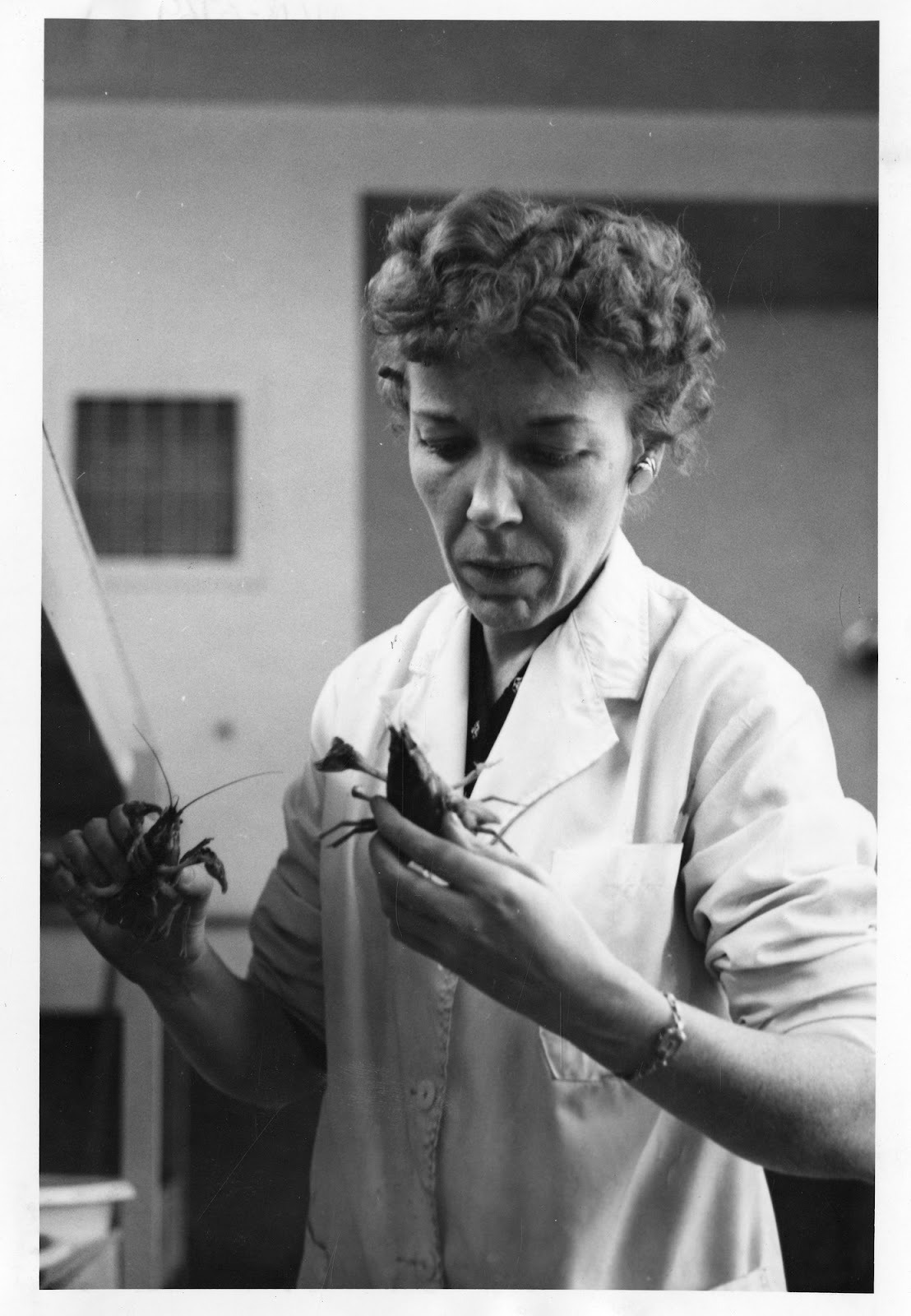
An American marine biologist and Chicago native, she became a pioneer in studying life in Antarctica’s extreme conditions. She dedicated her life to researching krill, crustaceans, and the processes of adaptation to the cold. Her scientific discoveries changed our understanding of polar sea biology, and her career broke down gender barriers in science. More at chicagoname.
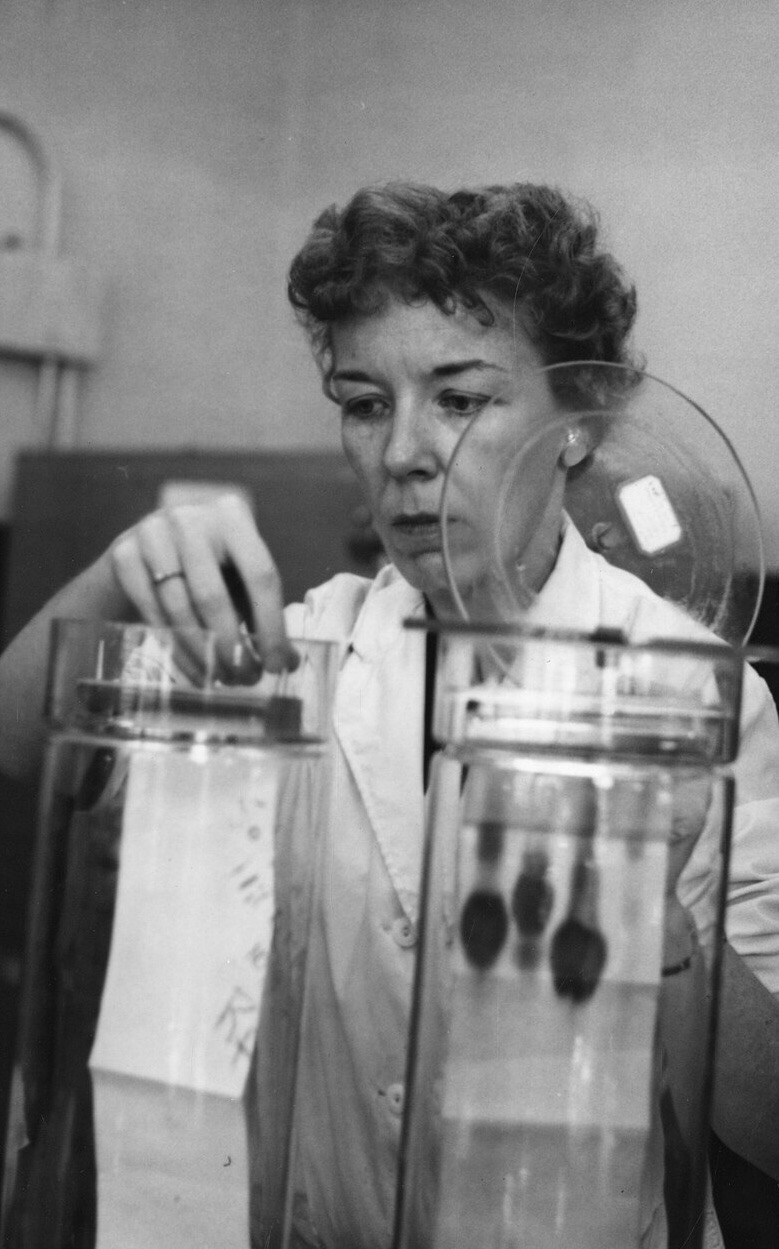
Biography
Mary McWhinnie earned her bachelor’s and master’s degrees in biology from DePaul University. She began teaching at the same university immediately after graduating—first as a graduate student and teaching assistant in the Department of Biological Sciences. From 1966 to 1968, McWhinnie chaired this department, becoming one of the first women in Chicago to lead a university biology department.
In 1952, she earned her doctorate from Northwestern University, specializing in invertebrate physiology.
Scientific Expeditions to Antarctica
A true scientific breakthrough in her career came in 1962 when the National Science Foundation (NSF) invited McWhinnie and her assistant, Phyllis Marciniak, to join an Antarctic expedition aboard the USNS Eltanin. Their goal was to study how water temperature affects the physiology of krill (Euphausiacea) and to understand how these tiny crustaceans could survive in extremely cold conditions.
Mary completed four expeditions on the “Eltanin”—in 1965, 1967, 1969, and 1970. She became the first female scientist ever to work in Antarctic waters. In 1972, she became the first woman to serve as chief scientist for an expedition on this vessel.
Until 1969, U.S. Antarctic programs remained all-male. That changed in 1974 when Mary McWhinnie and her colleague, Mary Odile Cahoon, became the first women to winter over at McMurdo Station, alongside 128 men. Later, during the 1975–1976 season, McWhinnie became the first female scientist to work at Palmer Station. In total, over her career, she made eleven expeditions to Antarctica, published more than fifty scientific papers, and gave dozens of lectures worldwide.
Teaching Career
McWhinnie worked at DePaul University for many years, where she not only taught but also actively developed the institution’s research capabilities. In the 1960s, she became one of the few women to chair a natural sciences department in the United States. Her leadership helped expand doctoral programs, attract grants, and open up opportunities for young female researchers.
During her time as chair of the biology department, most departments at DePaul were still led by men. McWhinnie’s role, therefore, had not just a scientific but also a symbolic dimension: she was opening doors into science for other women.
The DePaul University Archives holds the “Mary Alice McWhinnie Papers”—a collection of the researcher’s letters, photographs, scientific papers, and diaries. Her student, Dennis Shenborn, who was a member of the 1974 Antarctic team, also donated his own collection of materials to the university, documenting the life and work of scientists in the harsh conditions of the Southern Continent.
Key Scientific Discoveries
From 1977–1979, McWhinnie successfully kept Antarctic krill alive in a flowing seawater tank for the first time. She discovered a phenomenon she called “regression”: after spawning, the krill shrink in size and lose their sexual maturity. The scientist attributed this to a lack of food and the need for constant movement during the winter. She published over fifty scientific papers and repeatedly presented her research at conferences and scientific meetings, sharing knowledge about krill physiology and behavior with the international scientific community. Her research covered krill physiology, distribution, feeding habits, and ecological role in marine ecosystems. These discoveries are of immense importance for modern research on climate change and ocean pollution, as they help explain how external factors affect marine food sources and food chains.
McWhinnie also did extensive work on the hormone crustecdysone, which affects molting in crayfish and hermit crabs. She found that in the period before molting, the level of organic substances in their tissues decreases, while the concentration of amino acids increases—a process necessary for growth.
During the Antarctic winter, the scientist studied the respiratory processes of copepods (R. gigas)—microscopic marine crustaceans. She determined that their metabolism is adapted to low temperatures and an oxygen-poor environment, allowing them to have two reproductive periods per year—a unique phenomenon for such organisms.
In the last three years of her life, Mary McWhinnie traveled the world extensively, giving lectures on Antarctic ecology and continuing her research on marine fauna. She died on March 17, 1980. McWhinnie Peak in Antarctica and the Mary Alice McWhinnie Marine Science Center at Palmer Station are named in her honor. In June 1980, DePaul posthumously honored her with the university’s highest award, the Via Sapientiae Award, for her outstanding scientific achievements and dedication to teaching.
Mary Alice McWhinnie became a symbol of courage, perseverance, and scientific bravery. She not only opened new horizons in the study of ocean life but also opened doors for women in science. Her story is proof that a true calling is not afraid of the cold, the wind, or the loneliness of the ice.